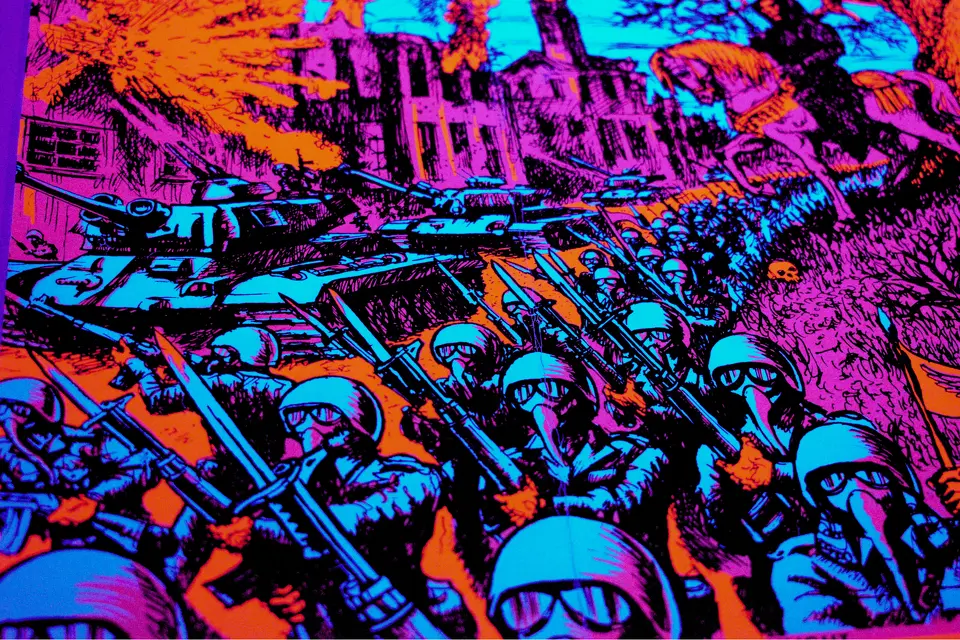
There's a bit in Robert Rodriguez's interview with Quentin Tarantino where Tarantino admits to being affected by how much of a commercial flop GRINDHOUSE turned out to be, and goes on to laugh about how Rodriguez doubled down and proceeded to come out with MACHETE and MACHETE KILLS.
Despite publication difficulties faced by THE SOLAR GRID, there's a part of me that would love to follow the Rodriquez method and double down and go on to make a series of short graphic novellas set in the world of THE SOLAR GRID anyway. Because you gotta admit, that would be kinda badass.
And if that doesn't shake away the whole “street-artist of the Egyptian revolution” thing that's become so intertwined with my reputation, I'm not exactly sure what else would.
#radar #journal
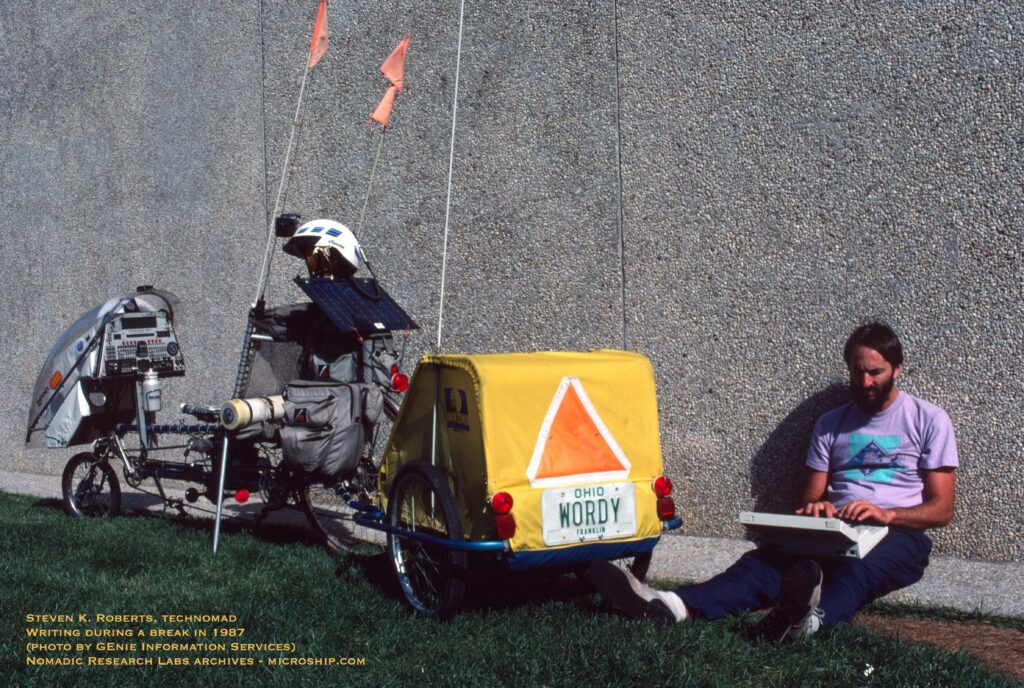
The world's first digital nomad: One Planet Journey interviews Steven K. Roberts.
Why Do Tech Bros Always Learn The Wrong Thing From Sci-fi? – Demonitzed on Youtube.
Music is a weapon – Chords and Discords on Youtube.
“Your eyes keep the world at a distance. You can look away from a horror film, you can step back from a painting, you can put down the book, or just close your eyes. But your ears can't do any of that. There's no such thing as earlids.” — Knrad, Chords and Discords.
#radar
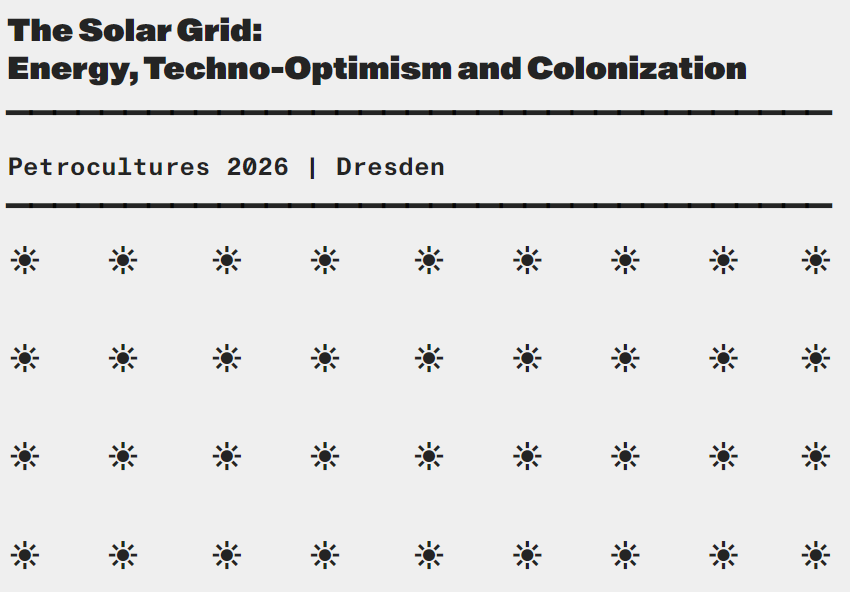
Dresden presentation in the can. Accounting taken care of. Laundry done. Inbox 0, RSS 0.
I can now spend the next couple of days tending to house things before boarding my flight with little worry.
From Ahmed Naji's latest:
“There is a legend about Abu Nuwas. He went to a master and asked to be taught. The master told him to go and memorize a thousand lines of poetry. He spent a year doing it, then returned. The master said: 'Good. Now forget them. If you can, you will be a poet.'”
#journal #radar
“I left Egypt alone. A writer with no affiliation to any political organization, wandered astray from my religious and national groups. However, once I arrived in America, this lost all value and meaning, for no sooner had I presented myself at the terminal gates did I not only receive the official government stamp, but left the airport branded with a whorish array of labels that I never got to have a say in choosing nor could make sense of.
“Soon, however, the minutiae of daily life in exile compels one, especially in the field of writing and cultural work, to gradually adapt to those labels invisibly branded on one’s backside. I recall that it was during my first few months in the country that someone asked me a question in which they referred to me as a brown writer —a term I was unfamiliar with at the time — and it was only after I asked for further explanation during which the same person stammered and fumbled to present me with an adequate answer that I finally understood it to be a term directed at writers who did not belong to the white or black race.”
From TAMING THE IMMIGRANT by Ahmed Naji.
“I have found that obedience and conformity in the United States are not strictly enforced or heavily guarded by armed soldiers or prisons, instead they present as a whisper, a sound vibration that crashes into your consciousness where they transform into ants that proceed to slowly and gradually eat away at your insides until they ultimately deform you after which they proceed to build you back up and mold you into what the system determines what you should become.”
#radar
Random thought: The whole simulation theory thing that seems to be increasingly trendy these days actually isn't at all at odds with any of the traditional religious beliefs of old, the ones that imagined god as an anthropomorphized king on a throne in the clouds. Because simulation theory by definition implies the entire universe being created by someone somewhere. The anthropomorphized king in this case being a computer programmer. The throne: an ergonomic chair. Which, if you think about it, just so happens to be this decade's flavor of king.
#radar #journal
Fantastic documentary on Enki Bilal from Standart.
Finally got around to reading Ahmed Khaled Tawfik's 2008 novel UTOPIA (in its original Arabic), which is just brilliant and in 2026 eerily close to reality.
Started watching SILO which I am enjoying enough, though I can't stand Rebecca Ferguson.
#radar
— Occult rituals in the Epstein files.
— “Just hang in there.” – Suzanne Vega for The Creative Independent.
— “An indie horror with internet origins has beaten the legacy franchise “Star Wars” at the box office this weekend.” – NBC news on the unexpected success of BACKROOMS and OBSESSION.
Migraine day today; No productivity for me.
#radar