Still in house-planning mode; found myself measuring all the things I'd like to have stored away that presently have no place to live and are thus resulting in abundant clutter. The purpose of these measurements, of course, is to design and build adequate storage space for all the things.
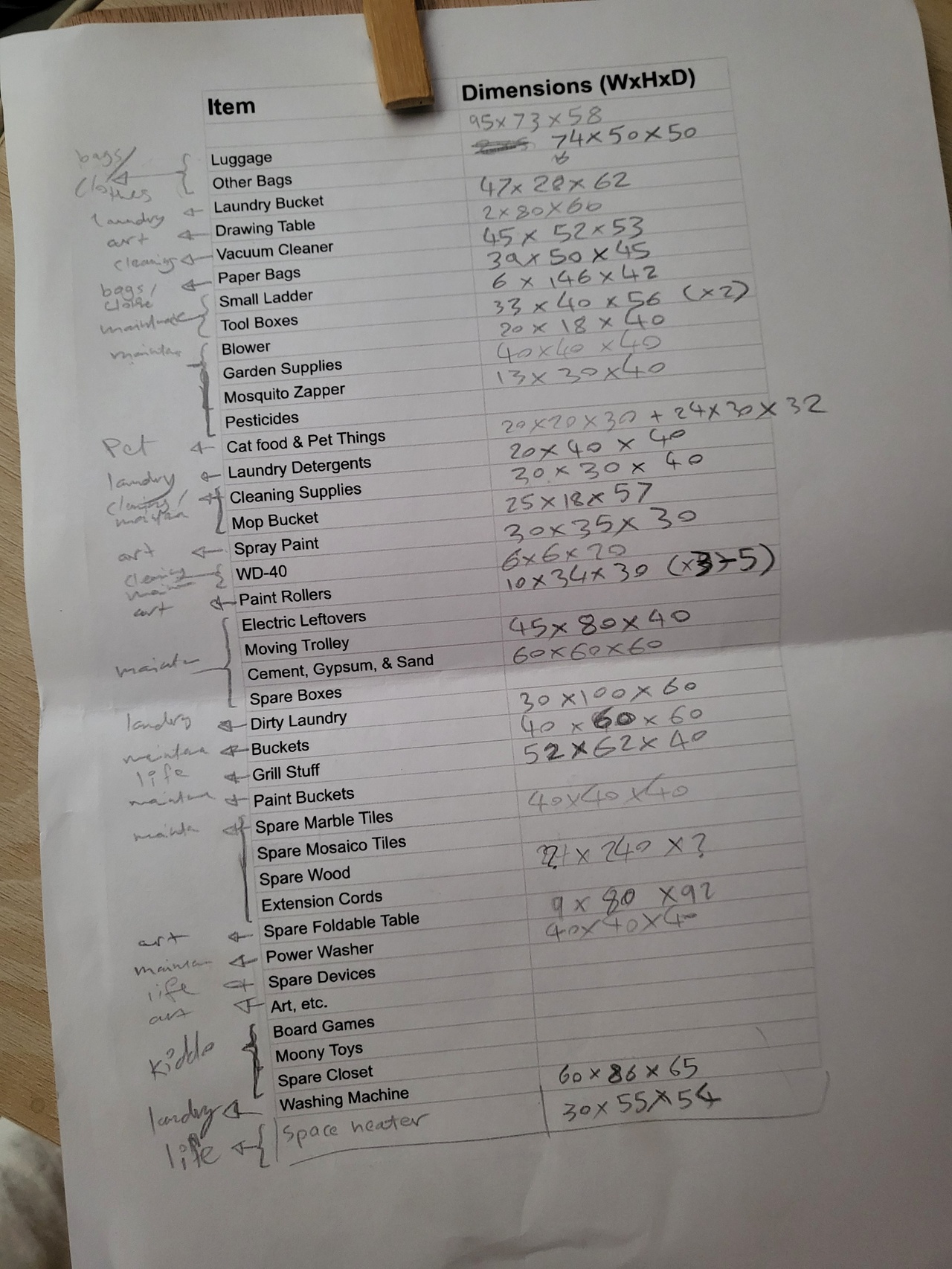
Does anybody else do things this way?
Ikea order incoming today, all things that will require assembly. So today will be a big “home stuff” day. Though I do have a few important emails to send out as well.
Awoke at 6:30 am despite falling asleep at 1:30 am. I've been waking up at 6:30 am on the regular for a few days now, no alarm clock save for the biological one. Which is a good thing, I guess. Just need to get my ass to bed earlier if I'm to give my body the rest it needs.
Inbox: 14, RSS: 14.
#journal #studio
Today, we really shall dedicate the day to tidying up because the studio is in such a mess and in dire need of cleansing.
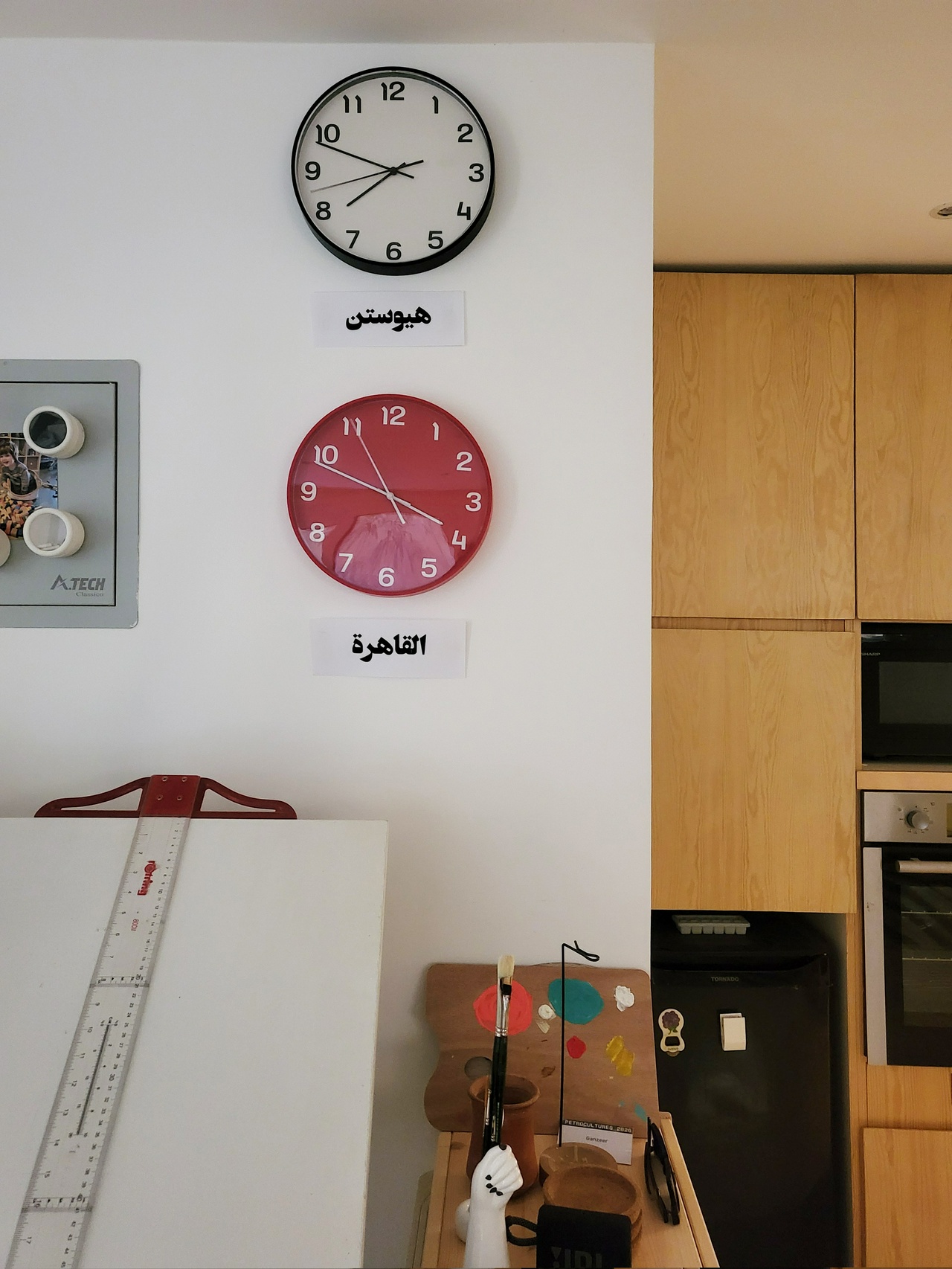
Two clocks above the drawing table now, one denoting the time in Houston and the other in Cairo. May need to get a few more clocks for other time-zones: New York probably, maybe Berlin, and possibly Seoul/Tokyo.
Inbox: 0, RSS: 0.
#journal #studio

Today was supposed to be my day of tidying up to the sound of soft music, but I ended up getting sucked into planning and designing all the things I'd like to have built at the home studio. Which is... a lot.
So much time is spent at the studio that not having it in tip-top shape just gets in the way of optimized living and working. Or so I like to tell myself only because I'm a slut for pleasant environments.
But also, Cairo is so insane and haphazard that having one's own delightful and impeccably thought-out refuge becomes a necessity to achieve any degree of mental sanity. Or so I like to tell myself.
#journal #studio
Drafting tomorrow's newsletter. Not ideal, because today has announced itself to be Migraine Day. The cause, I know; woke up yesterday at 6:00 am and didn't get to bed till 3:00 am! Despite which, I awoke today at 7:30 am! Running on little over than 3 hours of sleep here and cannot shut my eyes no matter how hard I try.
There really was no burning reason for me to pull a 21-hour day yesterday, it just sorta happened.
I may be stressing over the abhorrent amount of dough I dropped on a massive Ikea order the other day. But, I have been without a sofa or reading chair or adequate lighting or storage solutions for well over a year now and I just can't take it anymore. It's true that I may have promised myself to shun Ikea, but it still offers the fastest and most practical solutions to too many things, and Egyptian craft/handy men have broken me good.
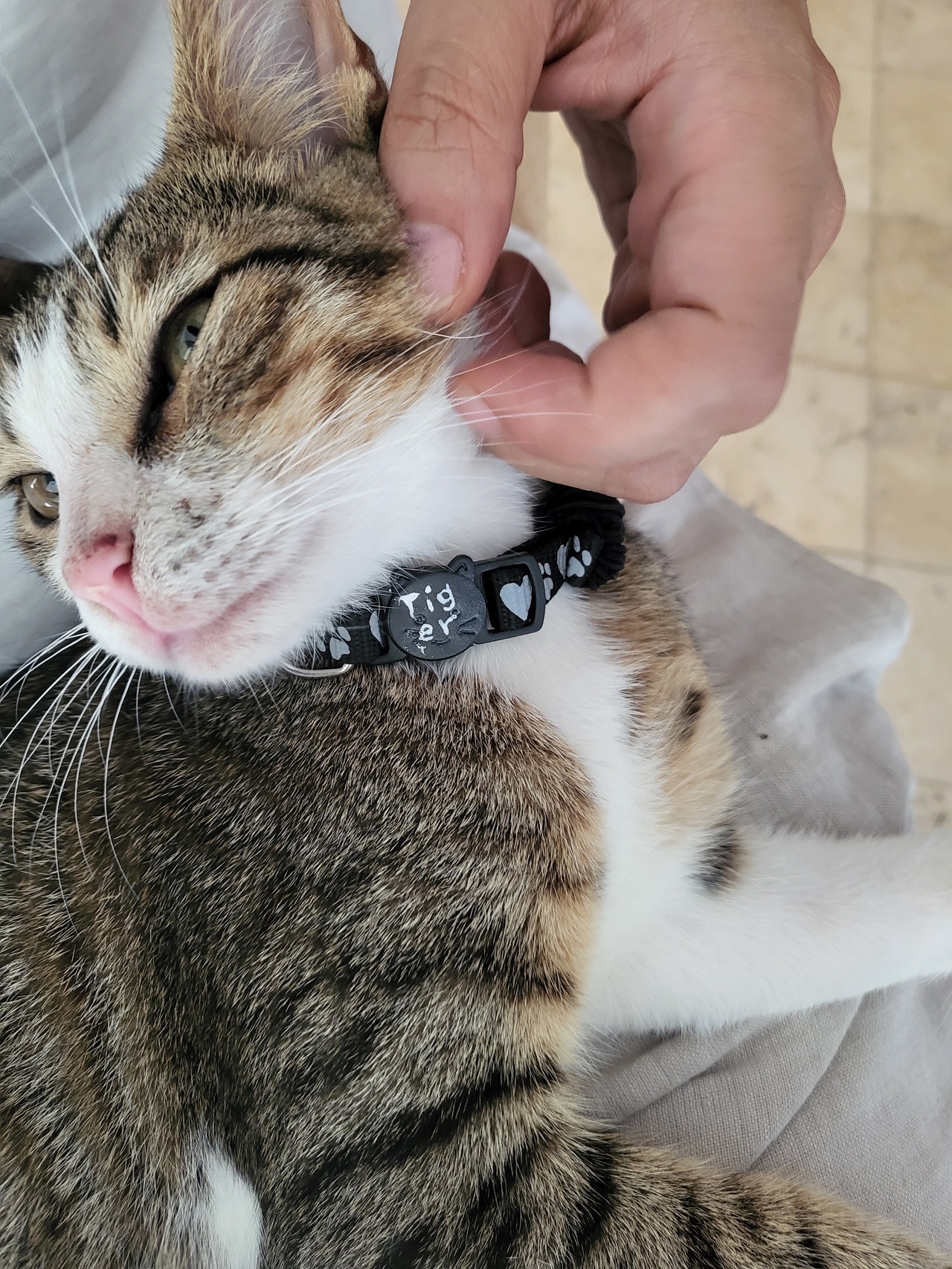
In other news, I am officially a cat daddy now. Little fucker wouldn't stop following me around, crisscrossing between my legs and often tripping me in the process. So I figured: fine, I'll let him inside. But not before bathing him which I figured would make him hate me to death till the end of time.
Nope, he made himself comfortable in my arms and let me lather away without the slightest bit of resistance. Even purring in the process! At which point, I completely gave in to the prospect of being his obedient slut for life. Because if you know anything about cats, you know that that level of trust seldom comes easy.
#journal
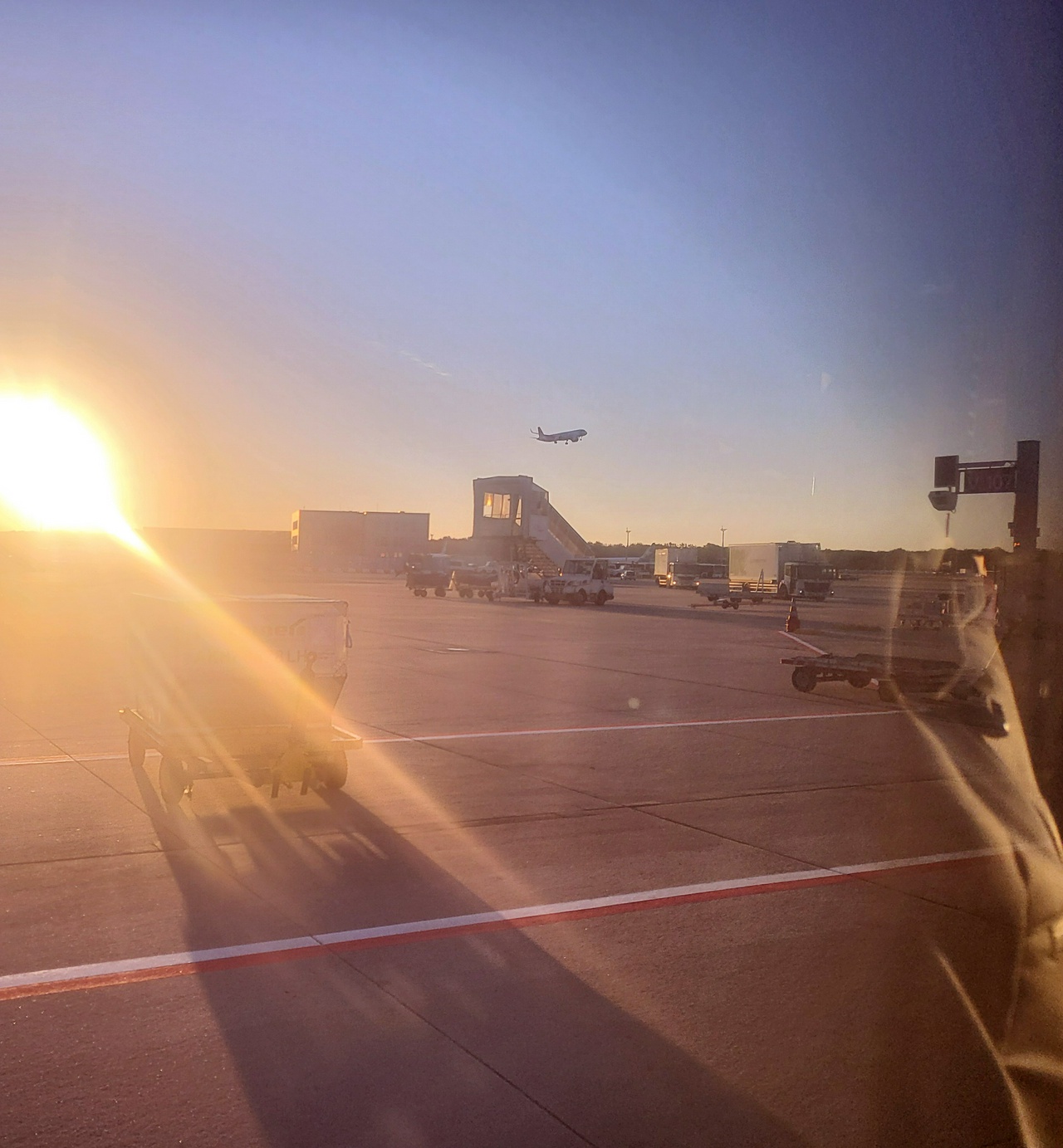
I guess it's a facet of being in your 40s; childhood memories you had long forgotten come back in fragmented chards. I remember growing up not far from the airport, looking up at planes coming and going, and dreaming of growing up one day and traveling to faraway places. This was in no way a realistic dream, for traveling was not something that was common or easy in my circles.
Despite several things not going my way in life, and indeed increasingly challenging in recent times, I realize how blessed and lucky I ultimately am. To be able to have gone to all the places I've gone and met the wonderful people I've met is nothing to be taken lightly.
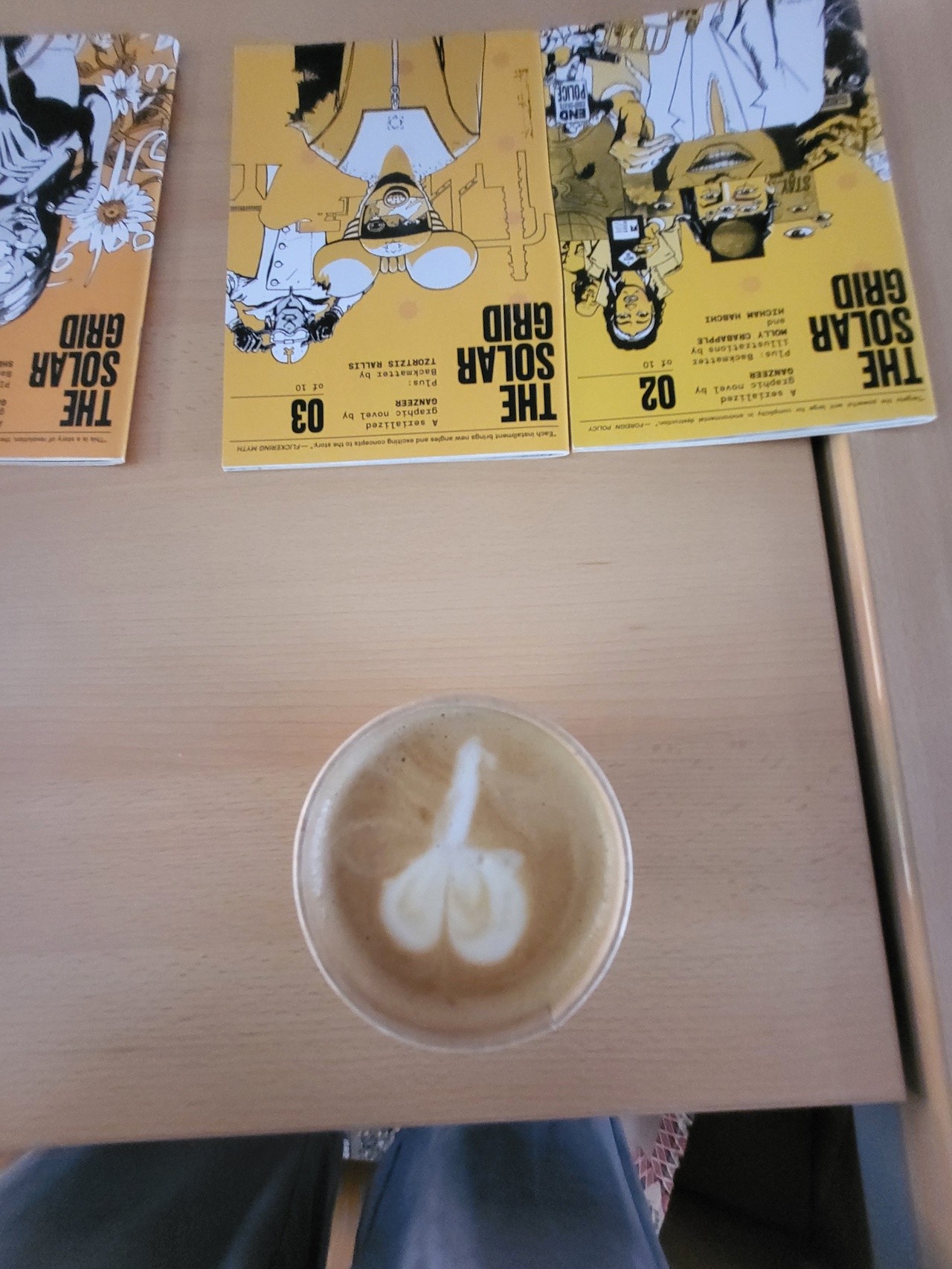
How many people can claim to have gotten beautiful dick art by a German barista?
#journal #travel
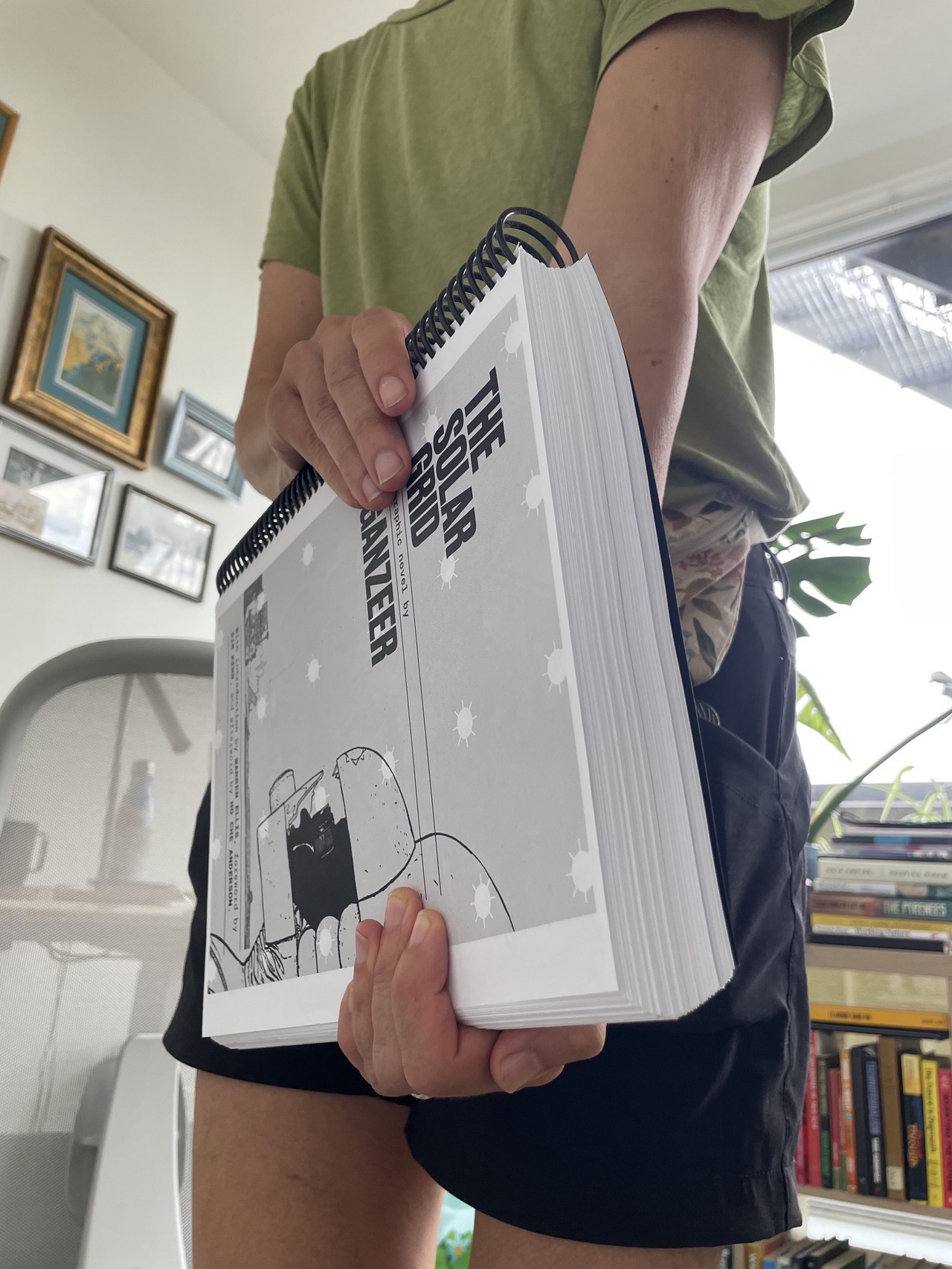
Bootlegged THE SOLAR GRID!
Imre Szeman, author of FUTURES OF THE SUN and one of the scholars on our THE SOLAR GRID panel at Petrocultures 2026 in Dresden, printed out the digital edition so he can read it that way in preparation for his presentation/commentary (which was so smart and immensely insightful). He made sure to have the pages printed on both sides, so his experience of the work would be the closest approximation to the intended format. And my, it's a big-ass motherfucker of a book, innit?
This is how I did much of my comics/graphic-novel reading in my late teens and early twenties, when my preferred comics-material was all too hard to come by in hardcopy formats in Cairo of the late-90s/early-2000s. So I have a strange affinity for that spiral-bound bootlegged home-printer aesthetic.
The panel was awesome! Super insightful (and embarrassingly humbling) presentations, great Q&A, and many exciting conversations thereafter. Several professors mentioned their plans to include THE SOLAR GRID in their teaching syllabi.
The air is refreshingly crisp in Dresden this time of year. Nothing quite like a midnight smoke out on the balcony in nothing but your underwear and a good German pilsner in hand.
#journal #work #tsg
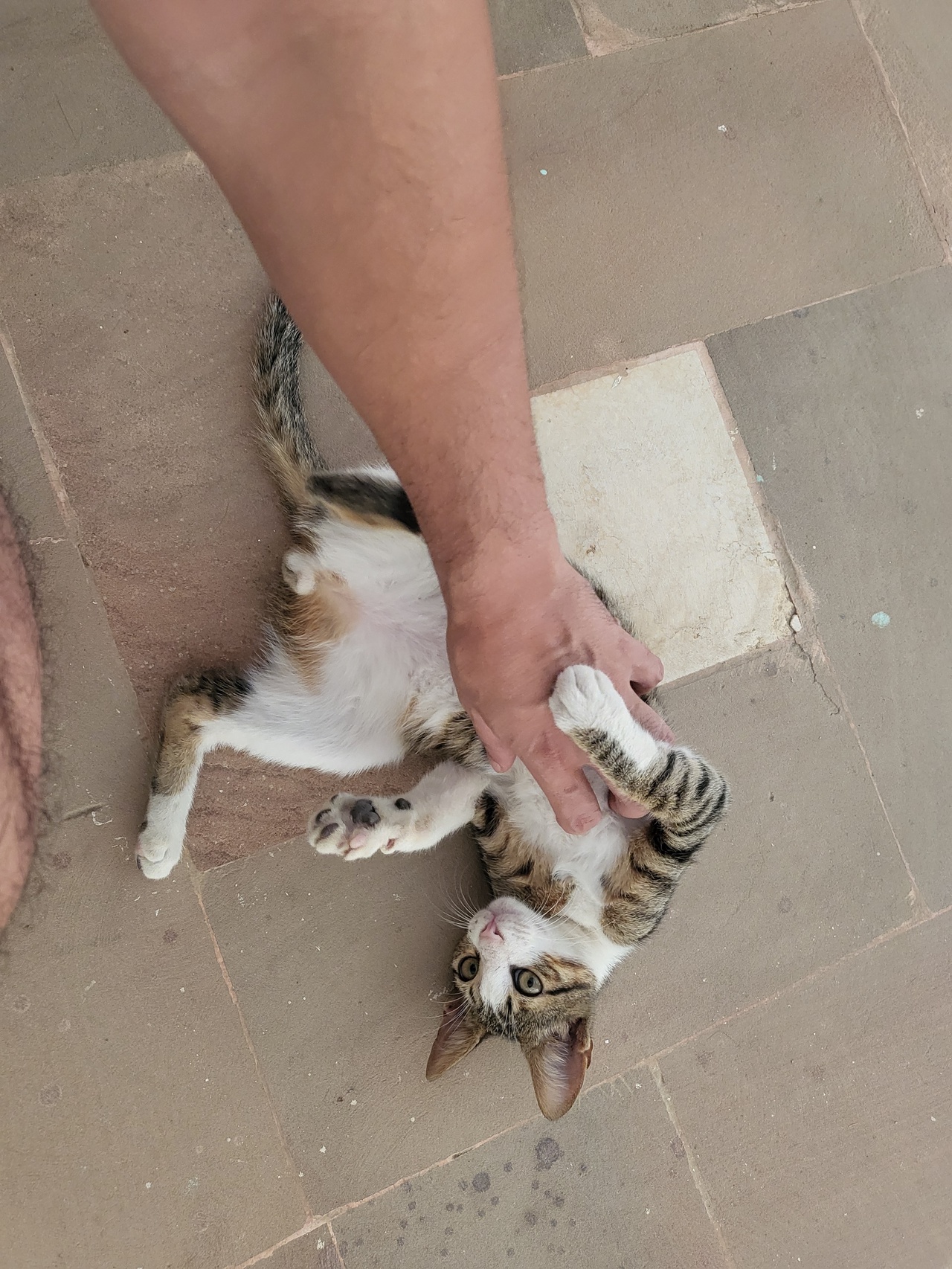
Koshary's kittens have all scurried off to explore the world, save for Tiger, who has decided to make the garden his domain. Curious, because he was the most avoidant of the lot. Now all of a sudden he's become an immensely affectionate little slut.
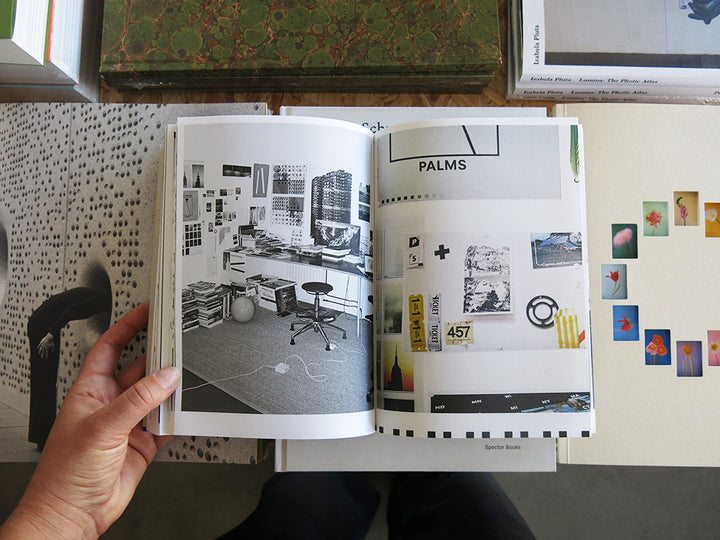
Amsterdam-based graphic designer Hans Gremmen has created over 400 books. While making these books, a miscellaneous pile kept growing in his studio: notes, sketches, photos, printed matter, screenshots, ephemera, and other breadcrumbs. ‘In Between’ is an attempt to deconstruct and re-organise this pile. The publication is a scrapbook about a hybrid design practice, but also a plea to consider failure as an option.
I would absolutely love to do something similar. I have an unruly amount of scraps, sketches, notes, process stuff, and photographs that I can absolutely see packaged and preserved in a similar way. Perhaps not in one big phonebook of a publication, but maybe an ongoing zine of sorts. A strange and regular rag that collects this stuff would absolutely work, given that such typically discarded material is likely to continue being a byproduct of the kind of work I do. Problem with that format is that it wouldn't sit on the shelf very well. But if each unit was in the hundred-page-range, you can give it a spine and make it work. A print-on-demand model might be a good option for this sort of thing.
Still, just the time it would take to gather this stuff and package it into a coherent and decent-enough design sounds like enough of a daunting sinkhole that I'm not sure I have the time for.
#journal #radar
There's a bit in Robert Rodriguez's interview with Quentin Tarantino where Tarantino admits to being affected by how much of a commercial flop GRINDHOUSE turned out to be, and goes on to laugh about how Rodriguez doubled down and proceeded to come out with MACHETE and MACHETE KILLS.
Despite publication difficulties faced by THE SOLAR GRID, there's a part of me that would love to follow the Rodriquez method and double down and go on to make a series of short graphic novellas set in the world of THE SOLAR GRID anyway. Because you gotta admit, that would be kinda badass.
And if that doesn't shake away the whole “street-artist of the Egyptian revolution” thing that's become so intertwined with my reputation, I'm not exactly sure what else would.
#radar #journal
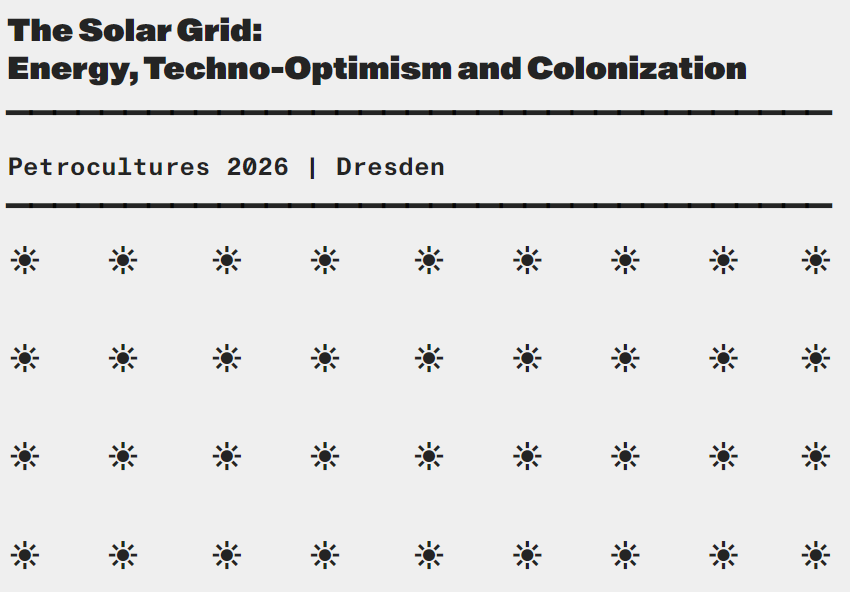
Dresden presentation in the can. Accounting taken care of. Laundry done. Inbox 0, RSS 0.
I can now spend the next couple of days tending to house things before boarding my flight with little worry.
From Ahmed Naji's latest:
“There is a legend about Abu Nuwas. He went to a master and asked to be taught. The master told him to go and memorize a thousand lines of poetry. He spent a year doing it, then returned. The master said: 'Good. Now forget them. If you can, you will be a poet.'”
#journal #radar
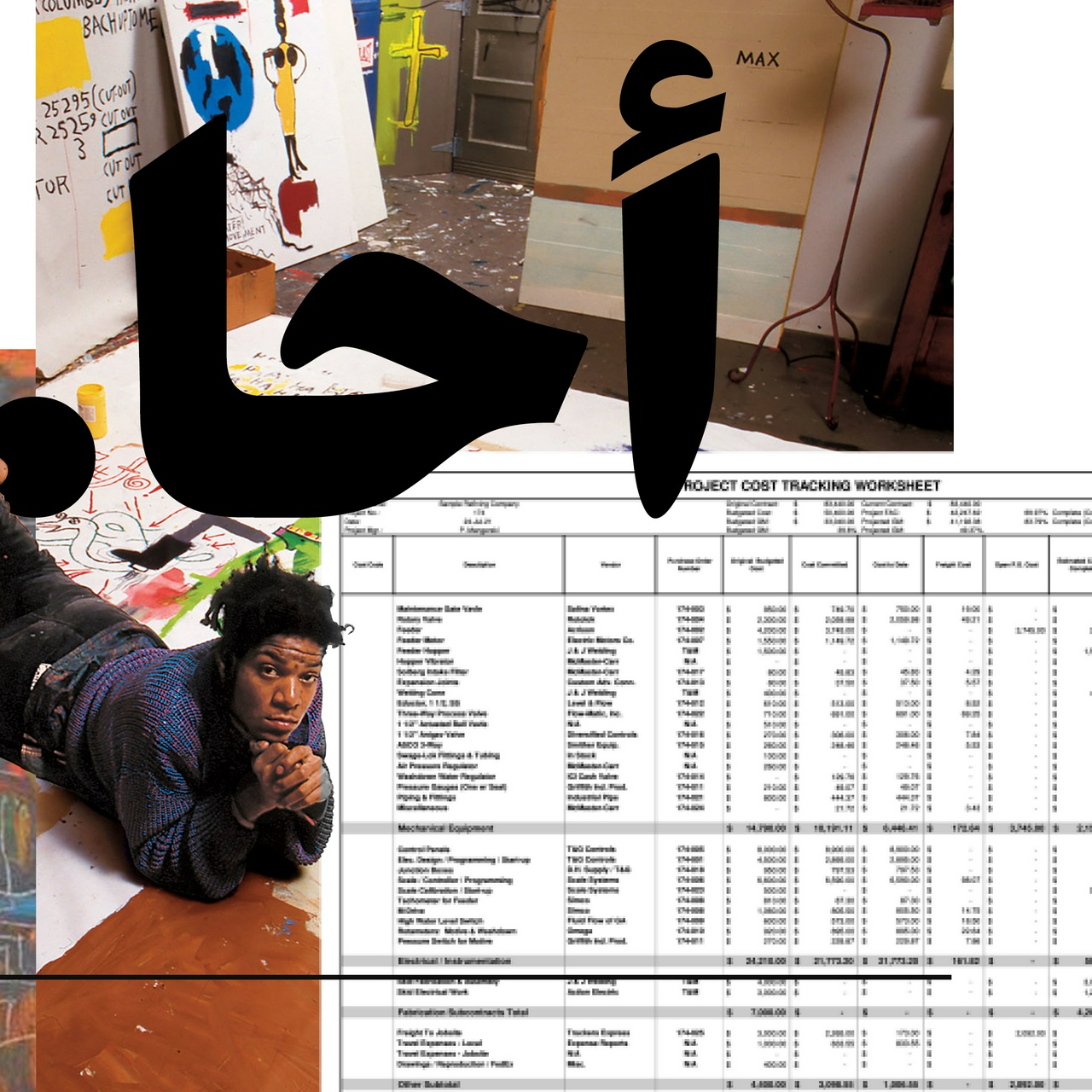
Lords save me from this nonsense.
Many don't know this, but I never went to art school. Much to my misery, I actually ended up in business school (long story). Though not a very good one.
One of things I was most looking forward to upon graduating was pursuing art and design full time and never having to look at anything even remotely close to a ledger ever again.
How naive.
In other news, I keep coming up against hurdles in regard to finding an appropriate publication pathway for the collected edition of THE SOLAR GRID. While almost every editor I send it to does make it a point to acknowledge the book's merits; “a project of immense passion”, “unique”, “graphically sophisticated”, it still gets turned down for one reason or another:
- “Not mainstream enough”, according to one well-positioned agent.
- “Not interested in anything dystopian anymore” said the much-respected editor at a major publishing house.
- “Too big” according to another major publisher.
- “Not quite for us”.
And then there are the few odd correspondences where a publisher would express initial interest and then ghost you. I realize of course that rejection stories aren't cool to divulge unless you have a success story to go with (at which point, rejection stories become extra extra cool), but I don't think of this blog as a space to project any kind of awfully considered persona. I like to say it like it is, likely to my own detriment.
Two more days till I'm off to Dresden and there is just so much to do that I'd rather not have to do.
#journal #tsg