G A N Z E E R . T O D A Y

tsg

Bootlegged THE SOLAR GRID!

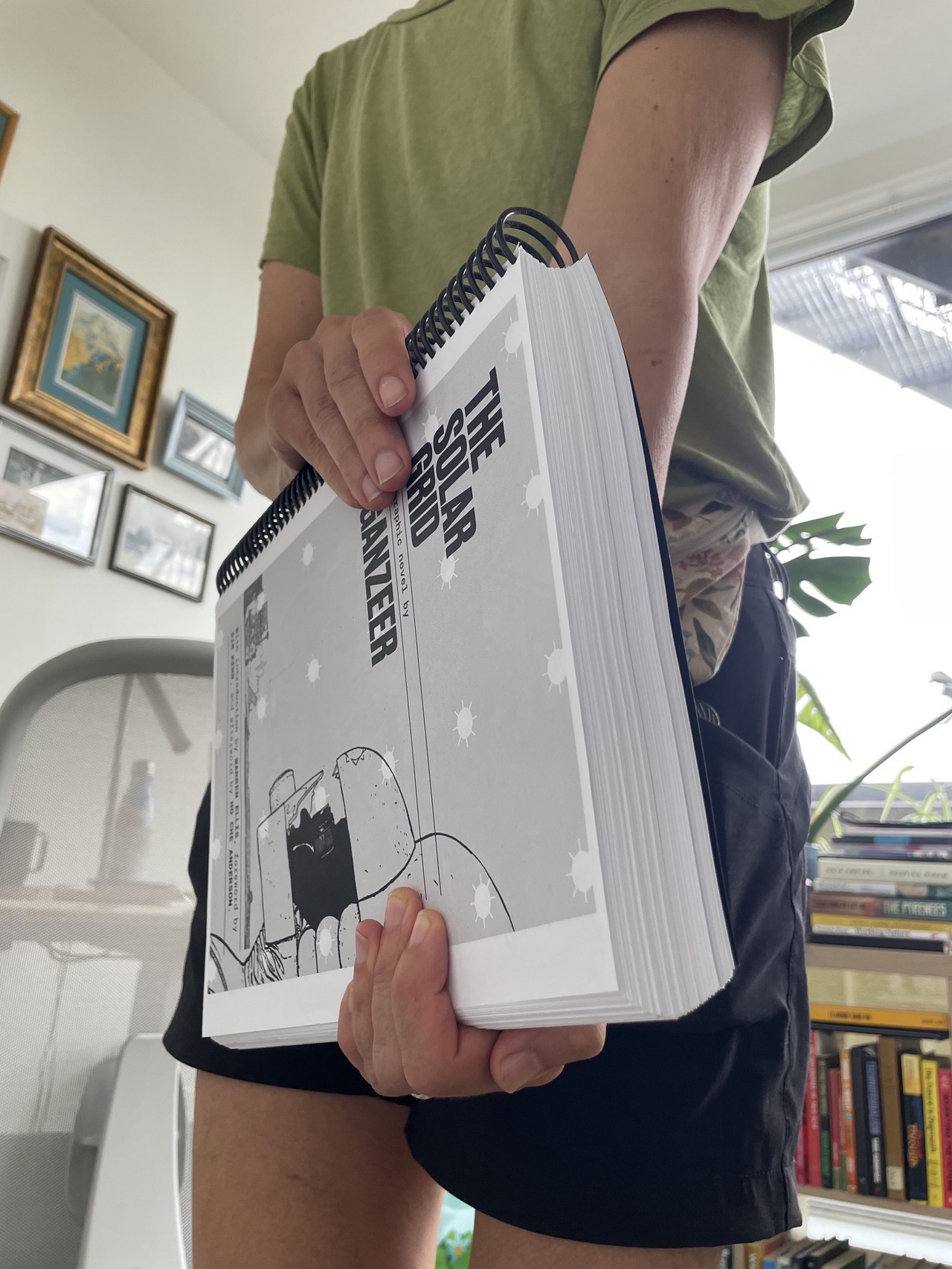
Imre Szeman, author of FUTURES OF THE SUN and one of the scholars on our THE SOLAR GRID panel at Petrocultures 2026 in Dresden, printed out the digital edition so he can read it that way in preparation for his presentation/commentary (which was so smart and immensely insightful). He made sure to have the pages printed on both sides, so his experience of the work would be the closest approximation to the intended format. And my, it's a big-ass motherfucker of a book, innit?

This is how I did much of my comics/graphic-novel reading in my late teens and early twenties, when my preferred comics-material was all too hard to come by in hardcopy formats in Cairo of the late-90s/early-2000s. So I have a strange affinity for that spiral-bound bootlegged home-printer aesthetic.

The panel was awesome! Super insightful (and embarrassingly humbling) presentations, great Q&A, and many exciting conversations thereafter. Several professors mentioned their plans to include THE SOLAR GRID in their teaching syllabi.

The air is refreshingly crisp in Dresden this time of year. Nothing quite like a midnight smoke out on the balcony in nothing but your underwear and a good German pilsner in hand.

#journal #work #tsg

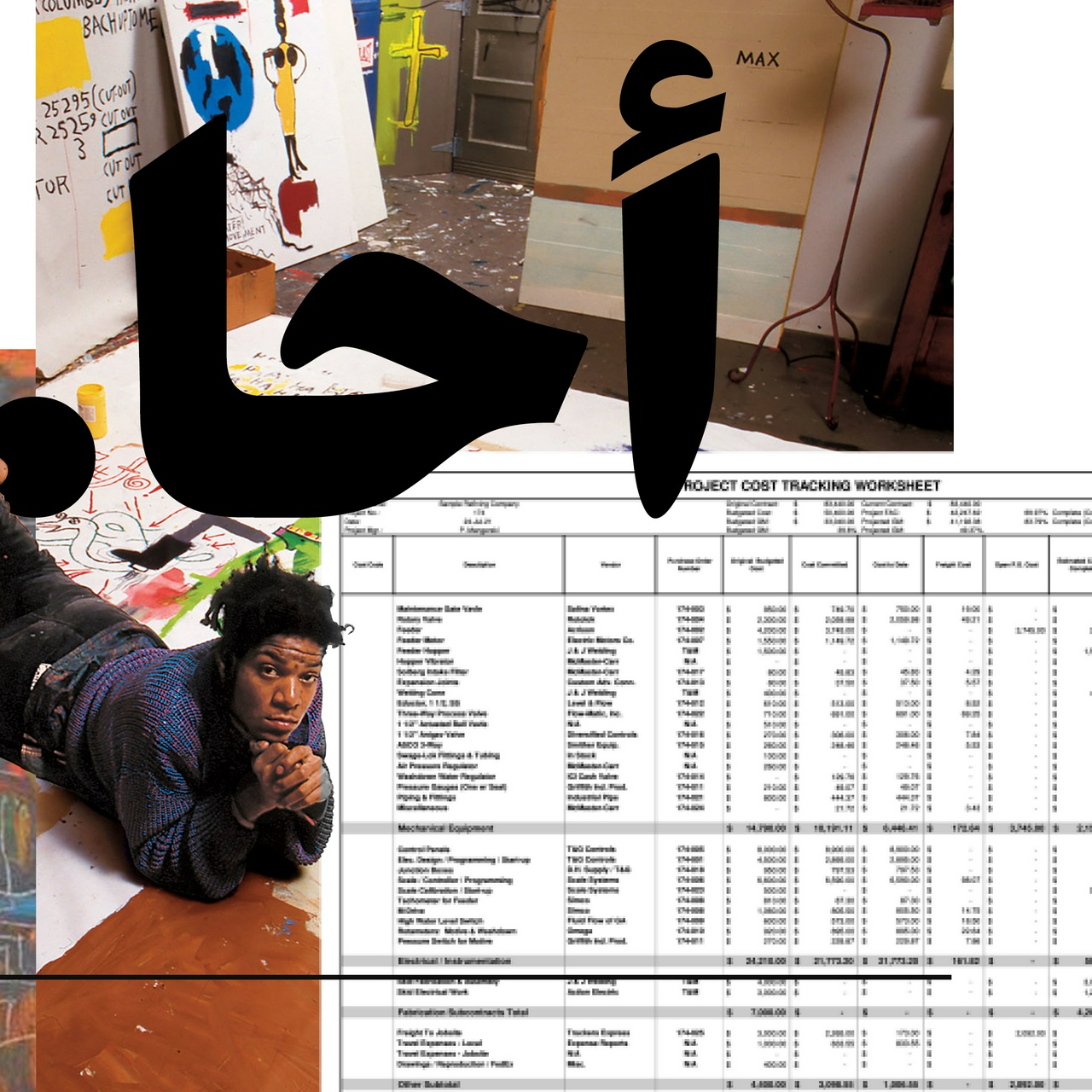
Lords save me from this nonsense.

Many don't know this, but I never went to art school. Much to my misery, I actually ended up in business school (long story). Though not a very good one.

One of things I was most looking forward to upon graduating was pursuing art and design full time and never having to look at anything even remotely close to a ledger ever again.

How naive.

In other news, I keep coming up against hurdles in regard to finding an appropriate publication pathway for the collected edition of THE SOLAR GRID. While almost every editor I send it to does make it a point to acknowledge the book's merits; “a project of immense passion”, “unique”, “graphically sophisticated”, it still gets turned down for one reason or another:

  • “Not mainstream enough”, according to one well-positioned agent.
  • “Not interested in anything dystopian anymore” said the much-respected editor at a major publishing house.
  • “Too big” according to another major publisher.
  • “Not quite for us”.

And then there are the few odd correspondences where a publisher would express initial interest and then ghost you. I realize of course that rejection stories aren't cool to divulge unless you have a success story to go with (at which point, rejection stories become extra extra cool), but I don't think of this blog as a space to project any kind of awfully considered persona. I like to say it like it is, likely to my own detriment.

Two more days till I'm off to Dresden and there is just so much to do that I'd rather not have to do.

#journal #tsg

Sent off the new REVISED & EXPANDED edition of THE SOLAR GRID to everyone who downloaded the previous version. A rather embarrassing message to have to send, but at least it's something that could be salvaged, unlike the shipping of flawed physical copies (so it's actually a plus I never took it to print earlier in the year).

Some of the most major revisions made (spoilers abound, naturally):

Chapter 01:
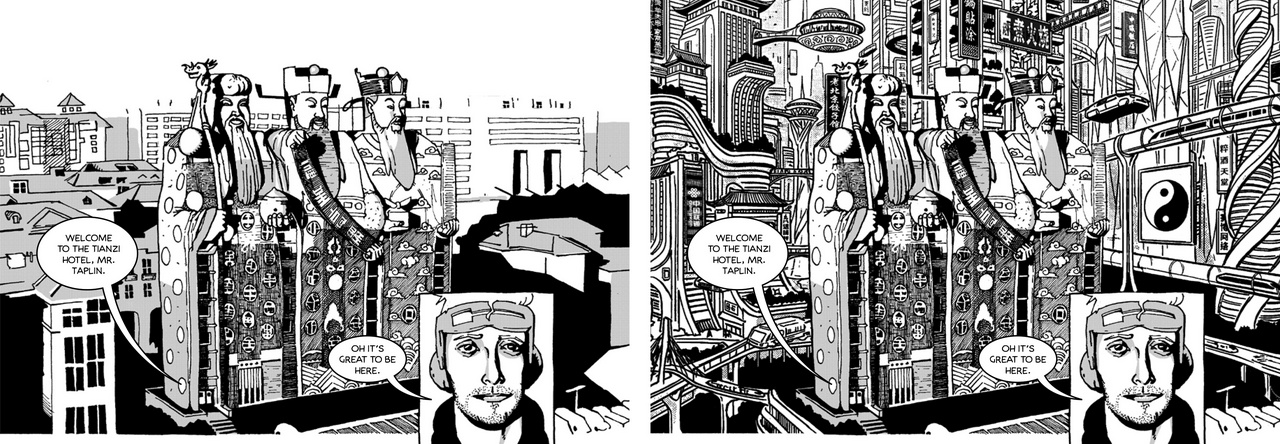
The Tianzi Hotel is a real place in a province 50 km southeast of Beijing. I originally chose it because I wanted something to visually indicate China without needing to include a big “China” caption at the top, and I had originally referenced it and its surrounding buildings from a photograph. Its surrounding buildings however offer a quaint and rather dated impression of China, which doesn't quite measure up to the “rivalry” felt by the US and referenced earlier in the chapter, all of which takes place in the future. So it occurred to me that all the architecture surrounding the Tianzi Hotel needed to be projected into the far future. The new line-art turned out a little thicker than I would've liked, but I think it works well enough.

Chapter 02:
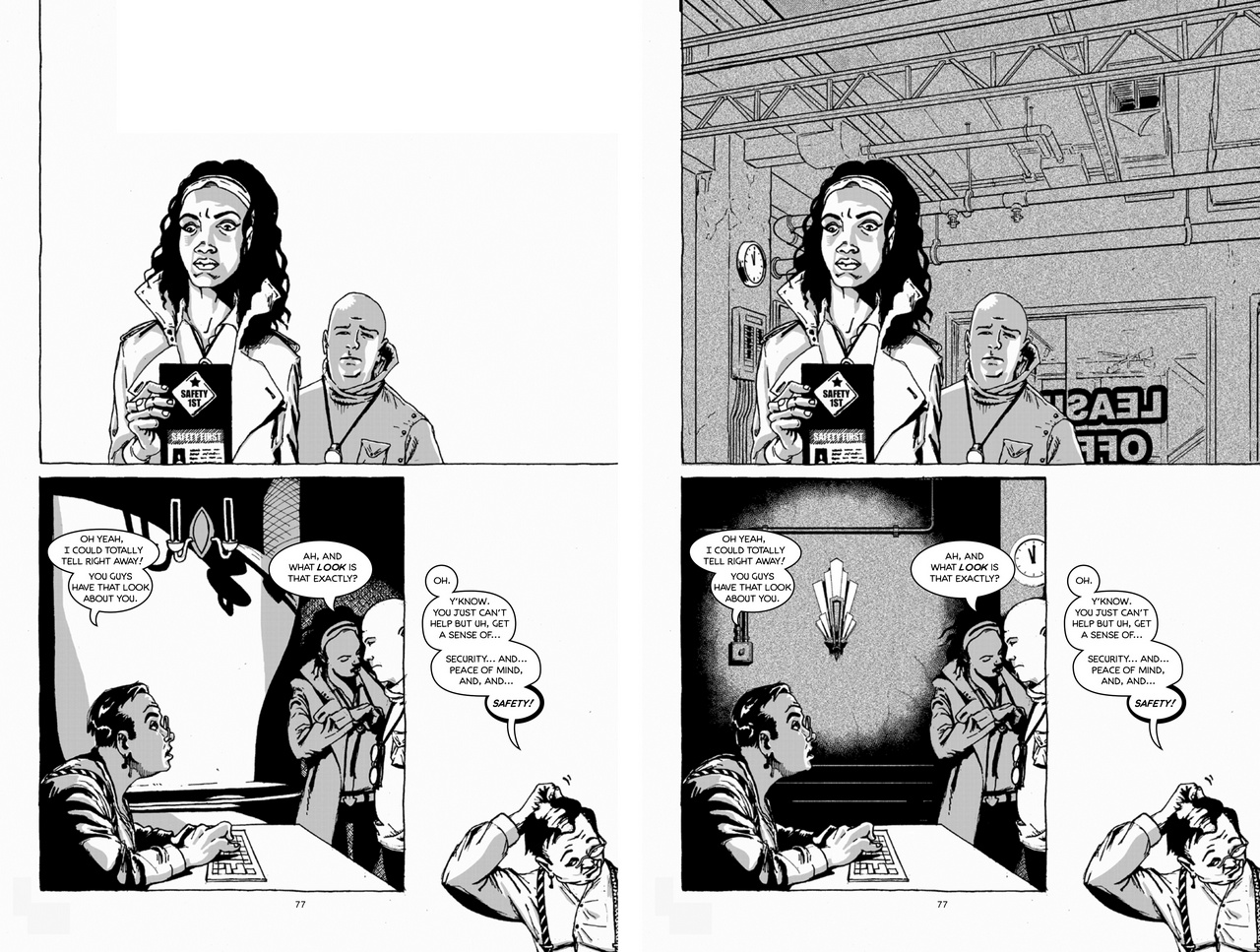
When I first drew this page early on in THE SOLAR GRID's development, I left the background in the first panel blank because I had intended to put in a big “EARLIER” caption in big, bold sans serif type (probably set in Govan, just like the chapter titles), which I didn't want to clash with an overly detailed background. This might've been the SCOTT PILGRIM influence at work, which is amusingly full of such captions. It works really well for the tone of SCOTT PILGRIM, but I ultimately decided it wouldn't be right for THE SOLAR GRID. Yet, I never went back in to fill that background, and its bugged me ever since. Once I got that background in there, I had to change the background in the second panel to match. There's a bit of a style disconnect—to be expected when adding something to a drawing you originally made over 10 years ago—but it isn't too glaring and I think it works much better than the original version.

Chapter 03:

Always wanted to include a post-flood Egypt travel ad in the backmatter portion of chapter 3, but got too preoccupied with wanting to finish the actual comics of the book to get around to it way back when.

Chapter 04:
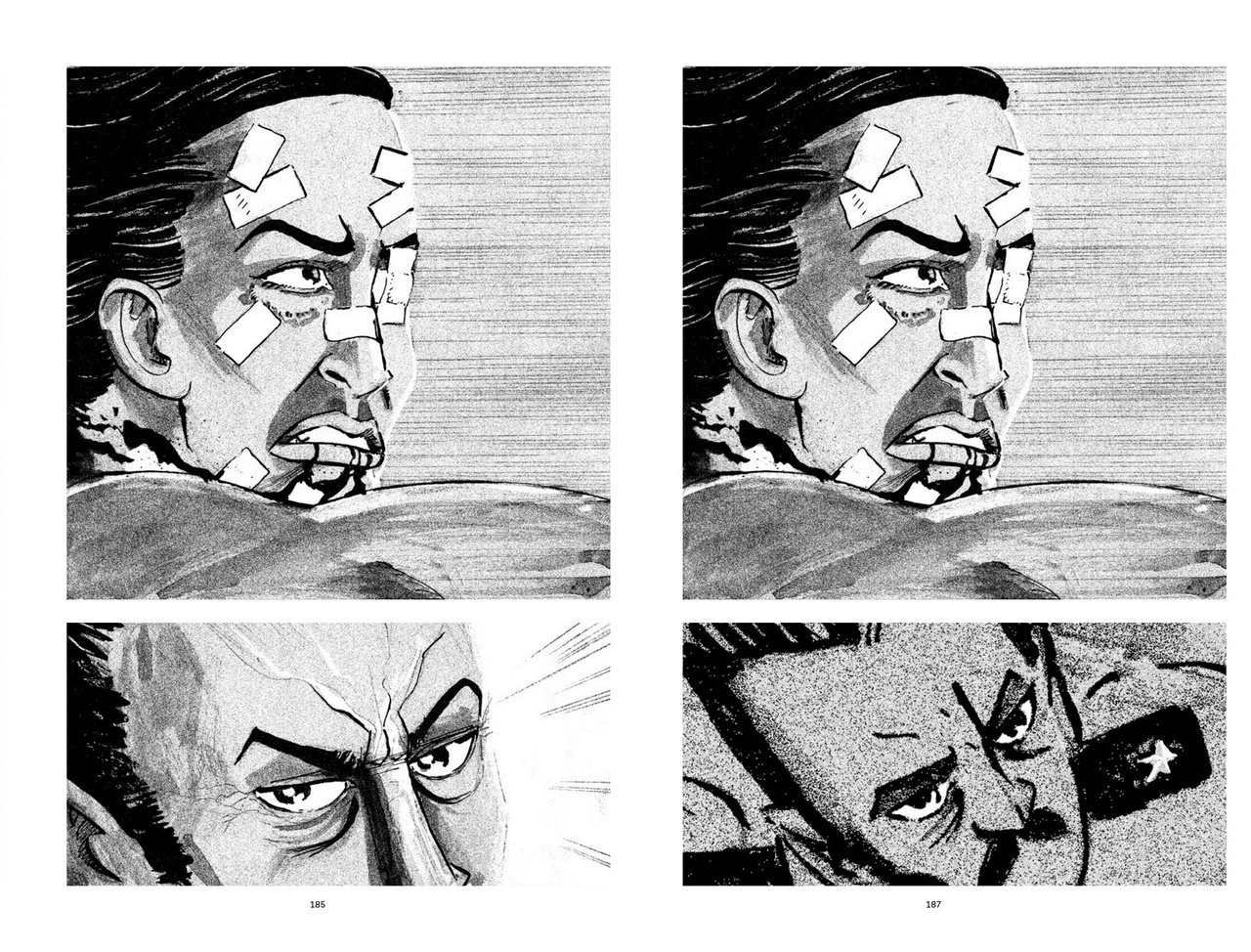
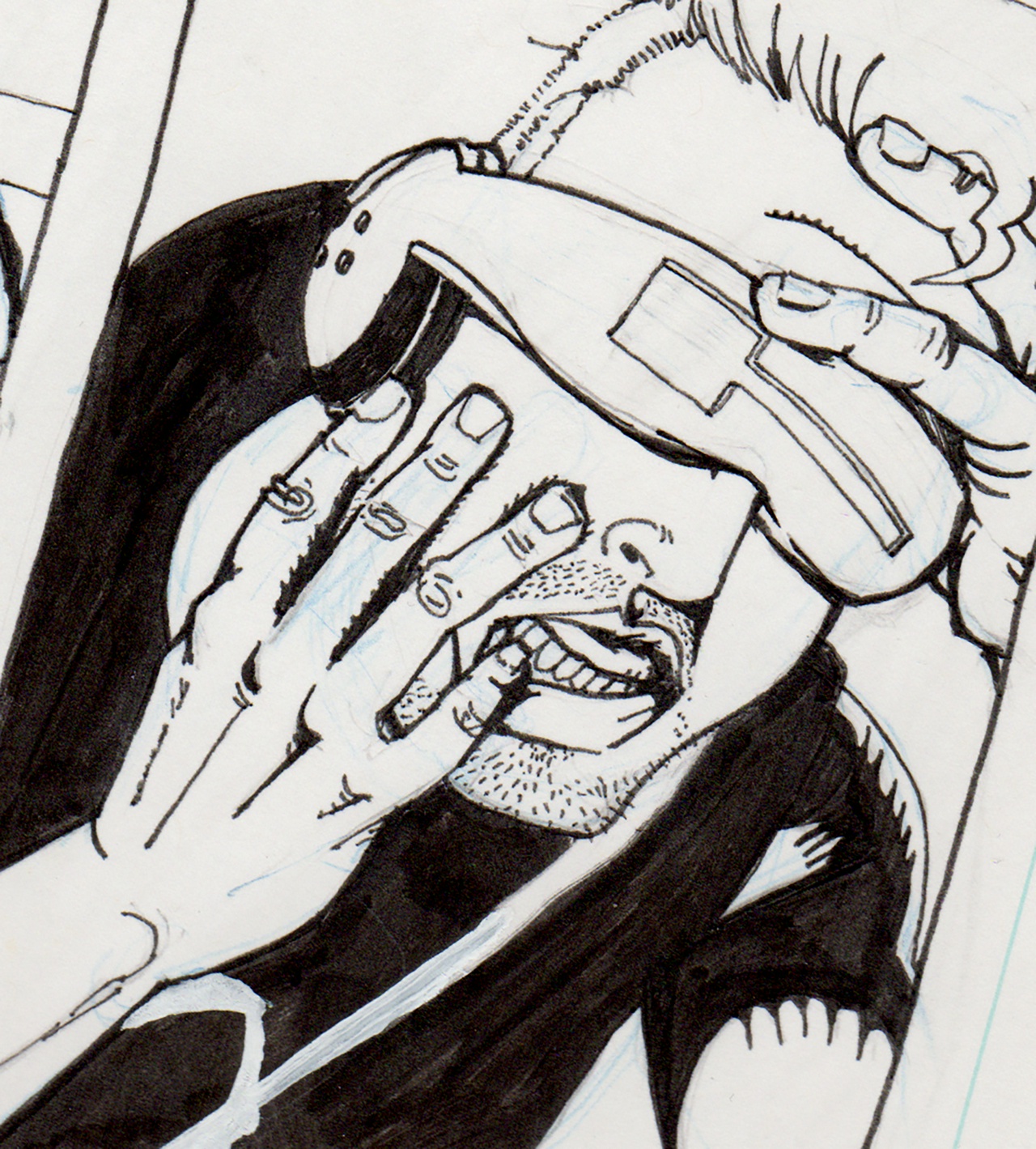
I was never satisfied with how tightly cropped the face in the second panel turned out (bottom left). Strikes me as just a tad confusing who the eyes belong to. So for the revised edition, I took a crop from a panel on a different page entirely and blew it up. Not a strategy I like to employ often, but applying it here improves the storytelling immensely.
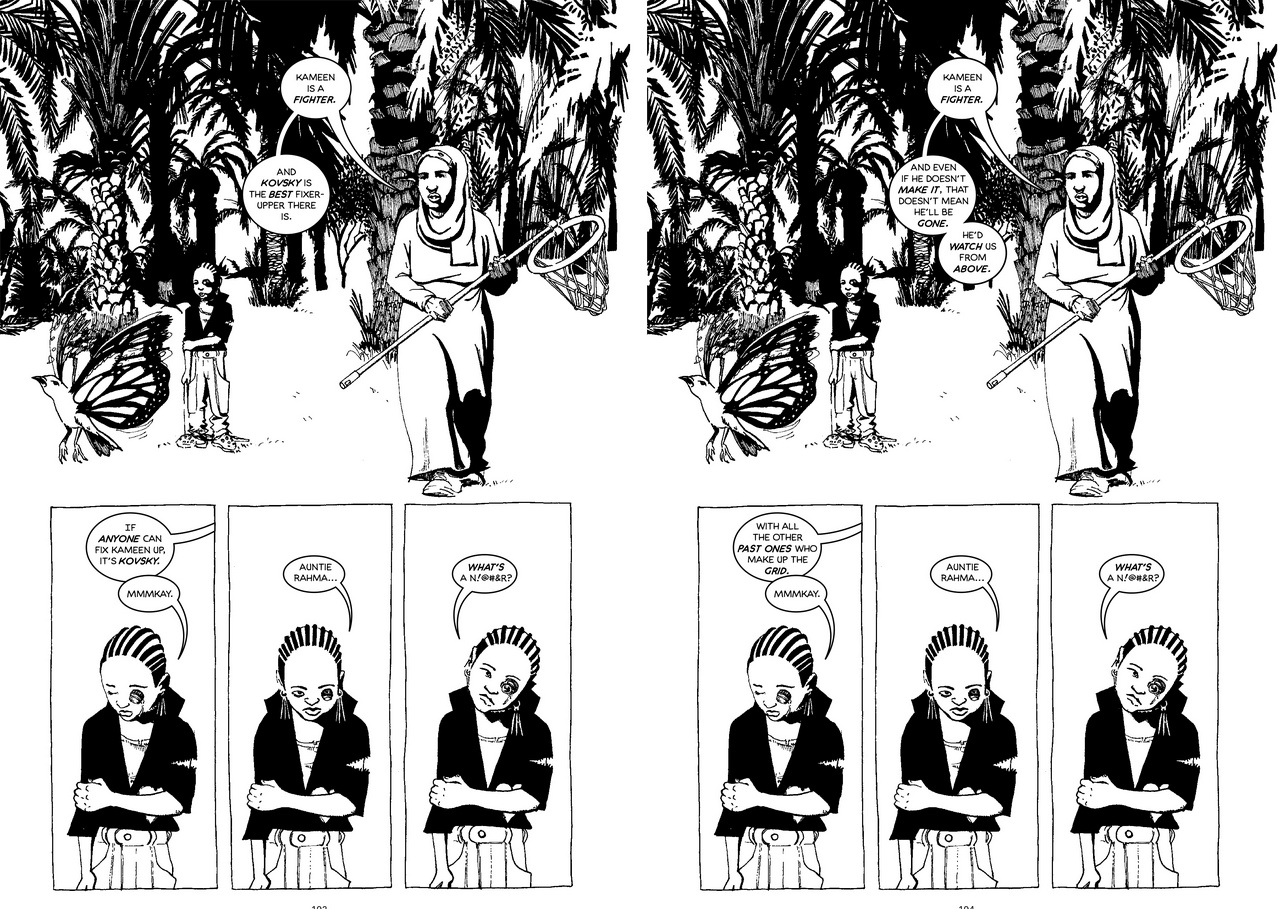
The original bit of dialogue on the left adds nothing of genuine value. The revised dialogue on the right tells us something about the belief system prevalent in Wastecountry in regard to the titular Solar Grid. Which helps make certain scenes later in the book far less confusing.
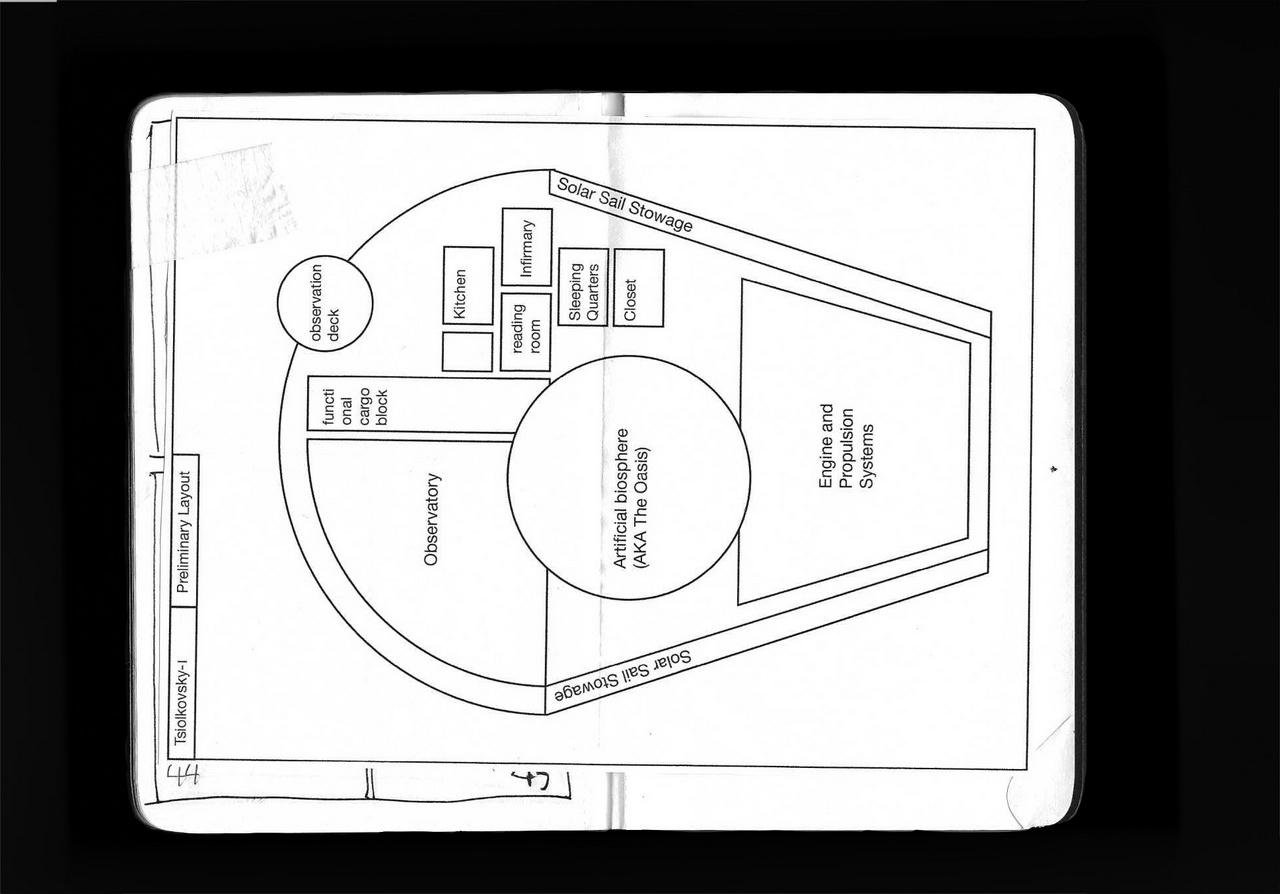
Added to backmatter to further make clear that “the oasis” where the bunnylynx was found actually sits within Kovsky's lair.

Chapter 05:
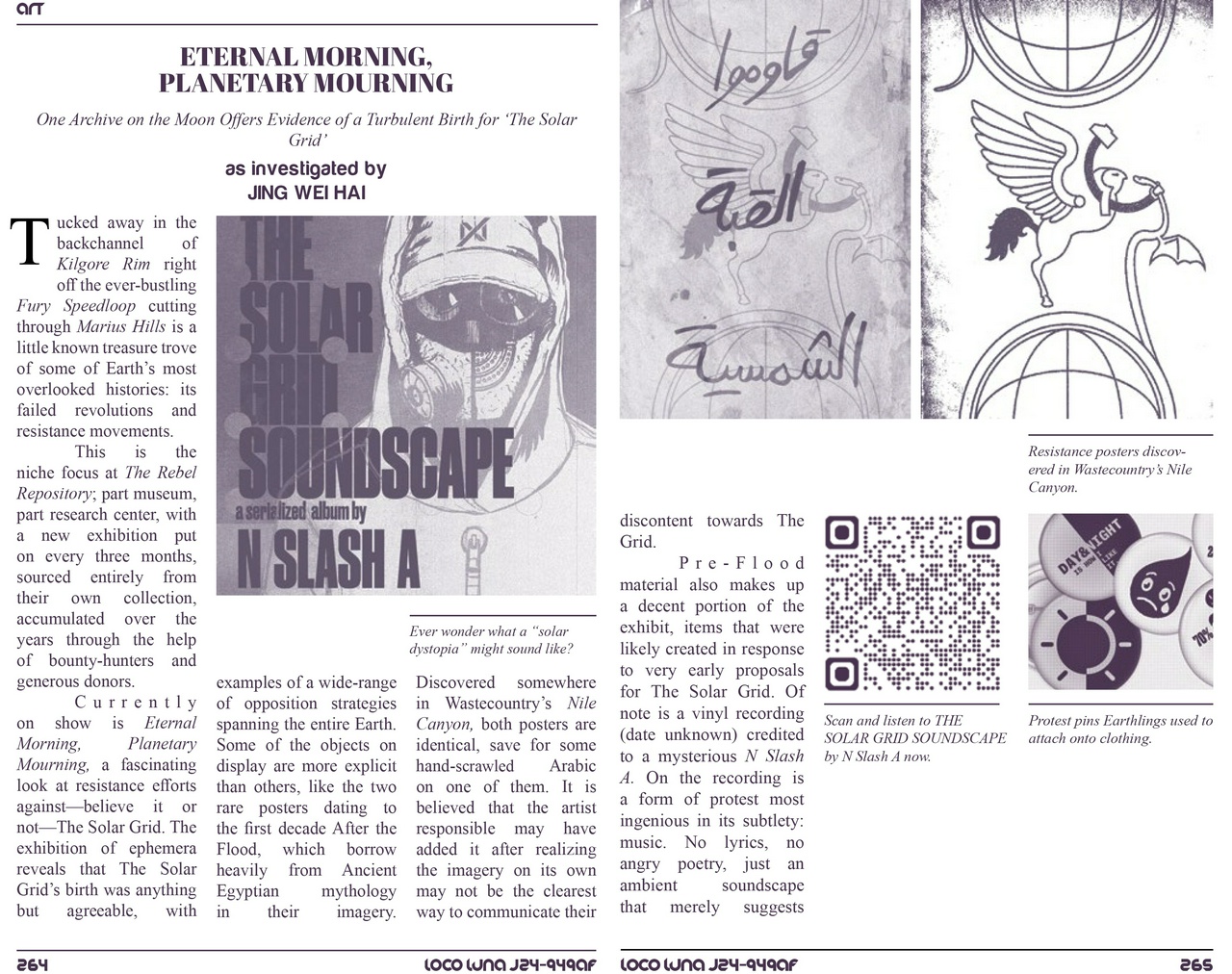
Added a scannable QR code in the backmatter, which takes the reader to the actual THE SOLAR GRID SOUNDSCAPE tracks created by N Slash A.

Chapter 06:
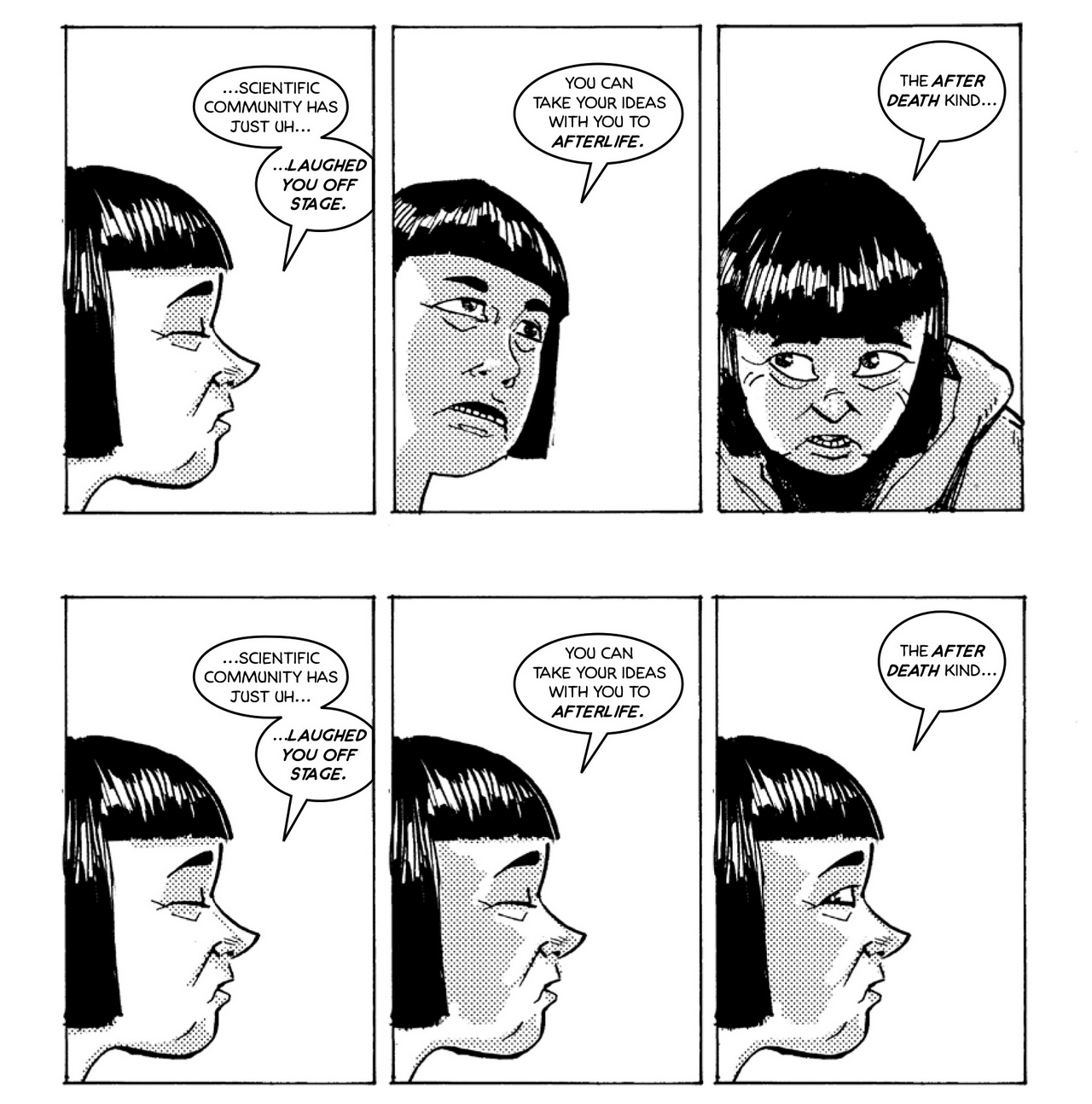
In the original version, I had the “camera” swivel from the side of the character's face to the front in 3 consecutive panels. Ultimately, that motion doesn't quite translate very well in comix, and keeping the frames fixed on her profile works much, much better.

Chapter 07:
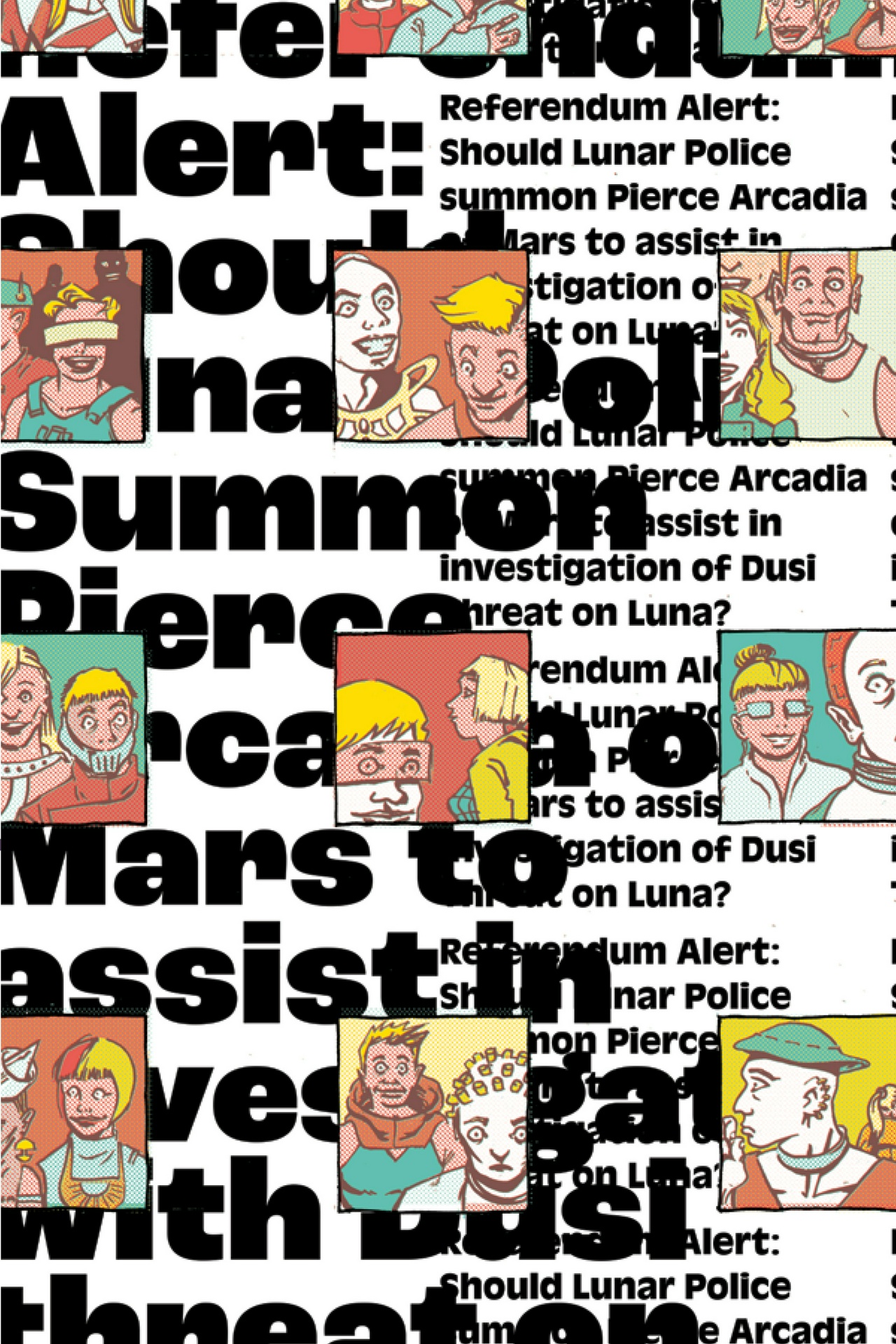
Added smaller versions of the text behind the panels in an effort to improve legibility and better make clear what is going on.
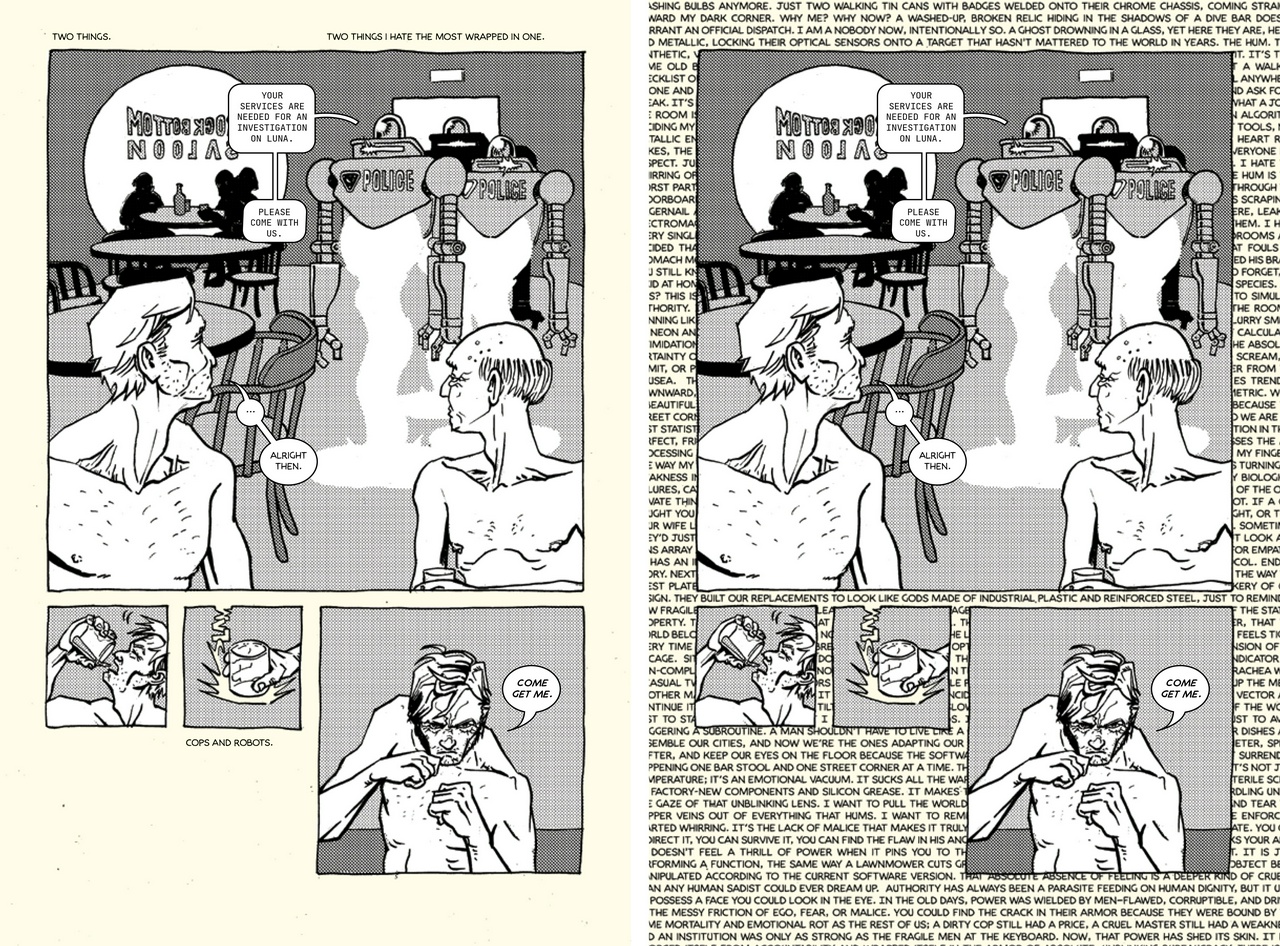
Earlier in the book, when not plugged into Hively, we have Mickie Stardust's train of thought fill the page behind the panels, something that gets completely obliterated once plugged in; he can no longer hear himself think. For Pierce Arcadia, I'd originally opted to not fill the entire page because he's intoxicated here and thus I figured his mind would largely be blank. This I think doesn't quite come across as intended, and the blankness of the page becomes a little odd after what we'd established with the Mickie Stardust sequences. In keeping with consistency, I opted to fill the page with a relevant train-of-thought for the new “revised & expanded” edition.
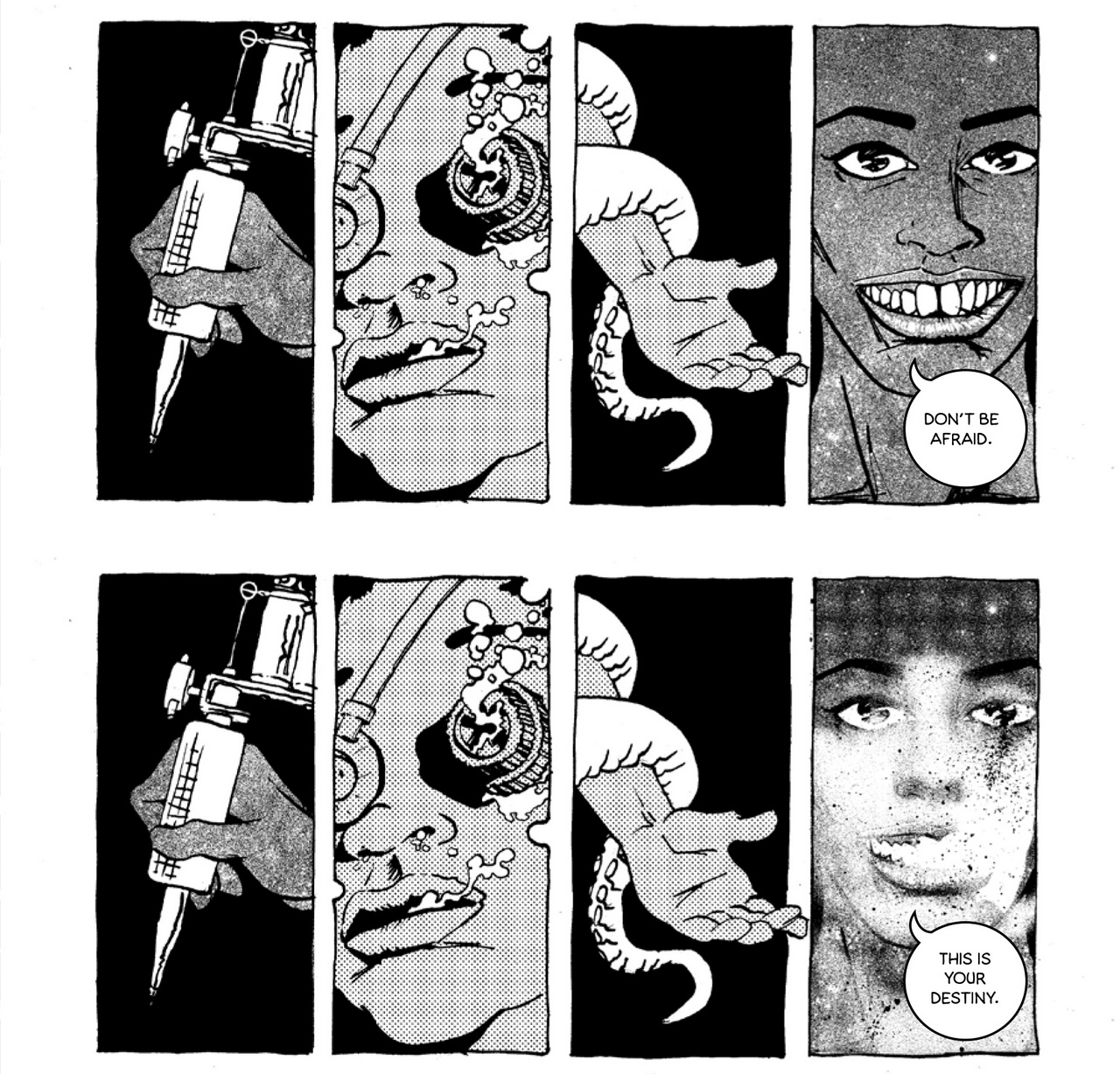
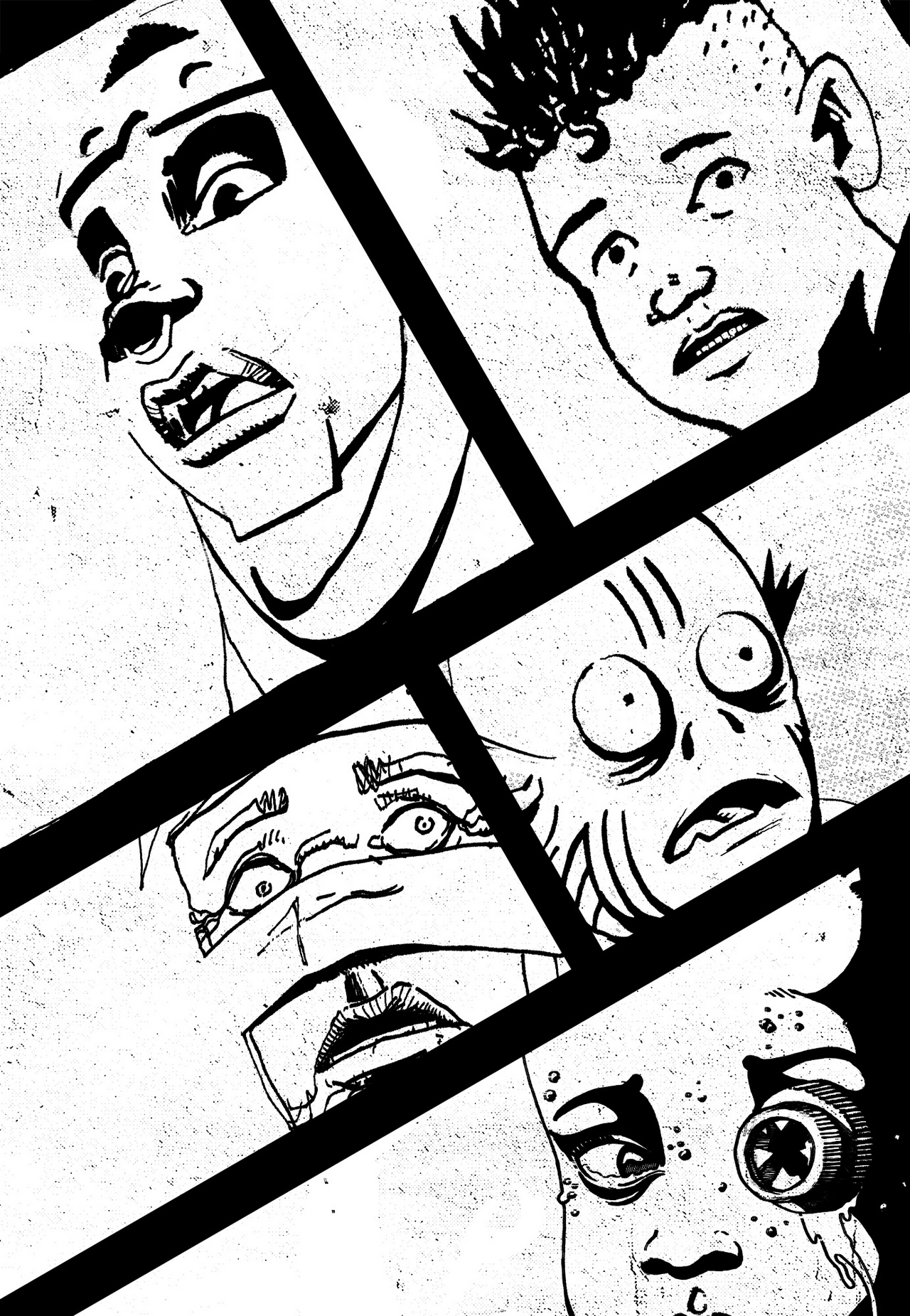
The original face in the 4th panel (top right) hadn't quite turned out as celestial as I would've liked (at all actually!). Messed with it, and made the dialogue stronger/more relevant.

Chapter 08:
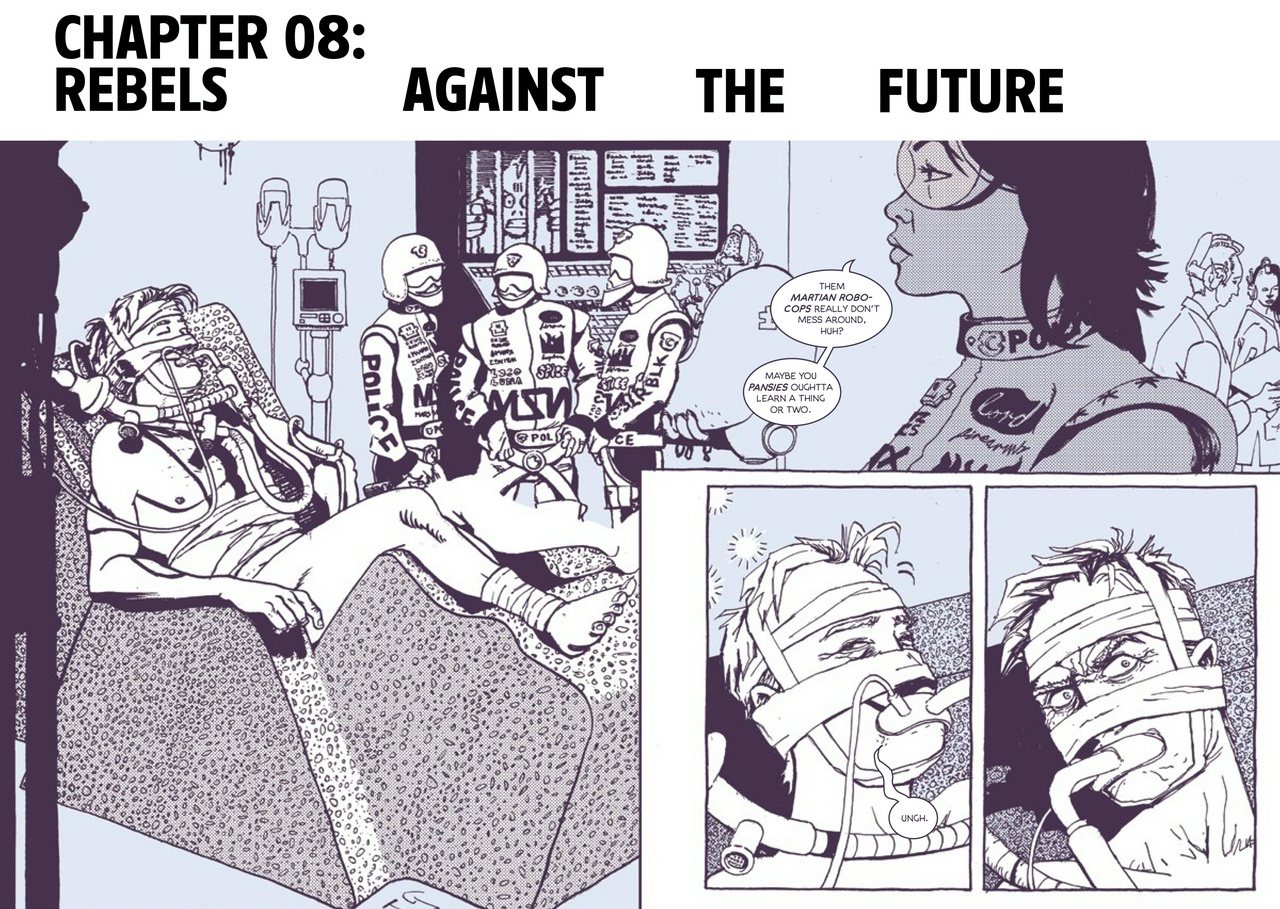
Originally, the chapter title was overlayed on the art, making the text far less legible than I liked. I prefer it with the crop a lot more.
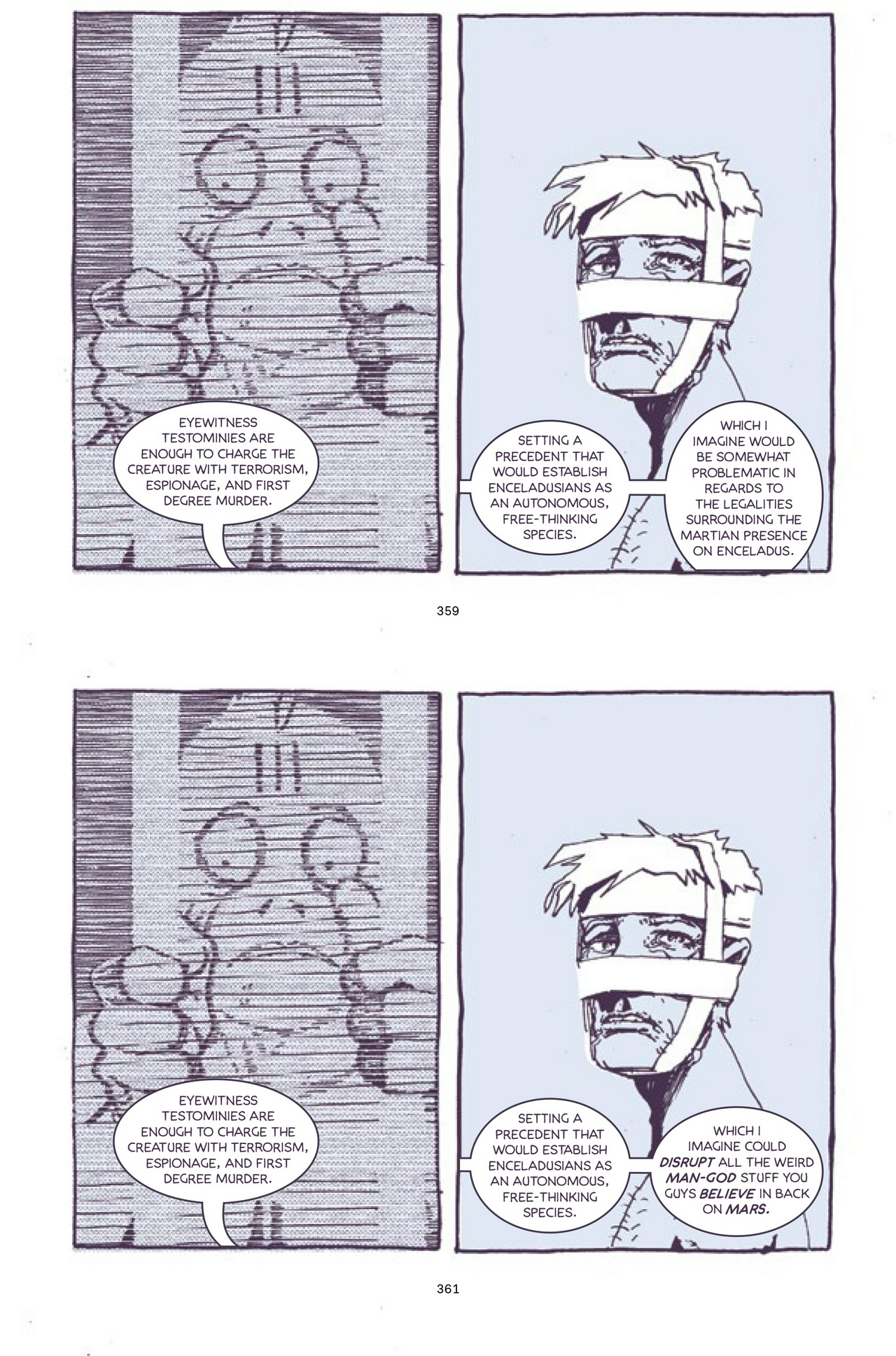
The revised dialogue (bottom right) ties better with something already established in the Galactic Geographic interview which appears a few pages earlier.
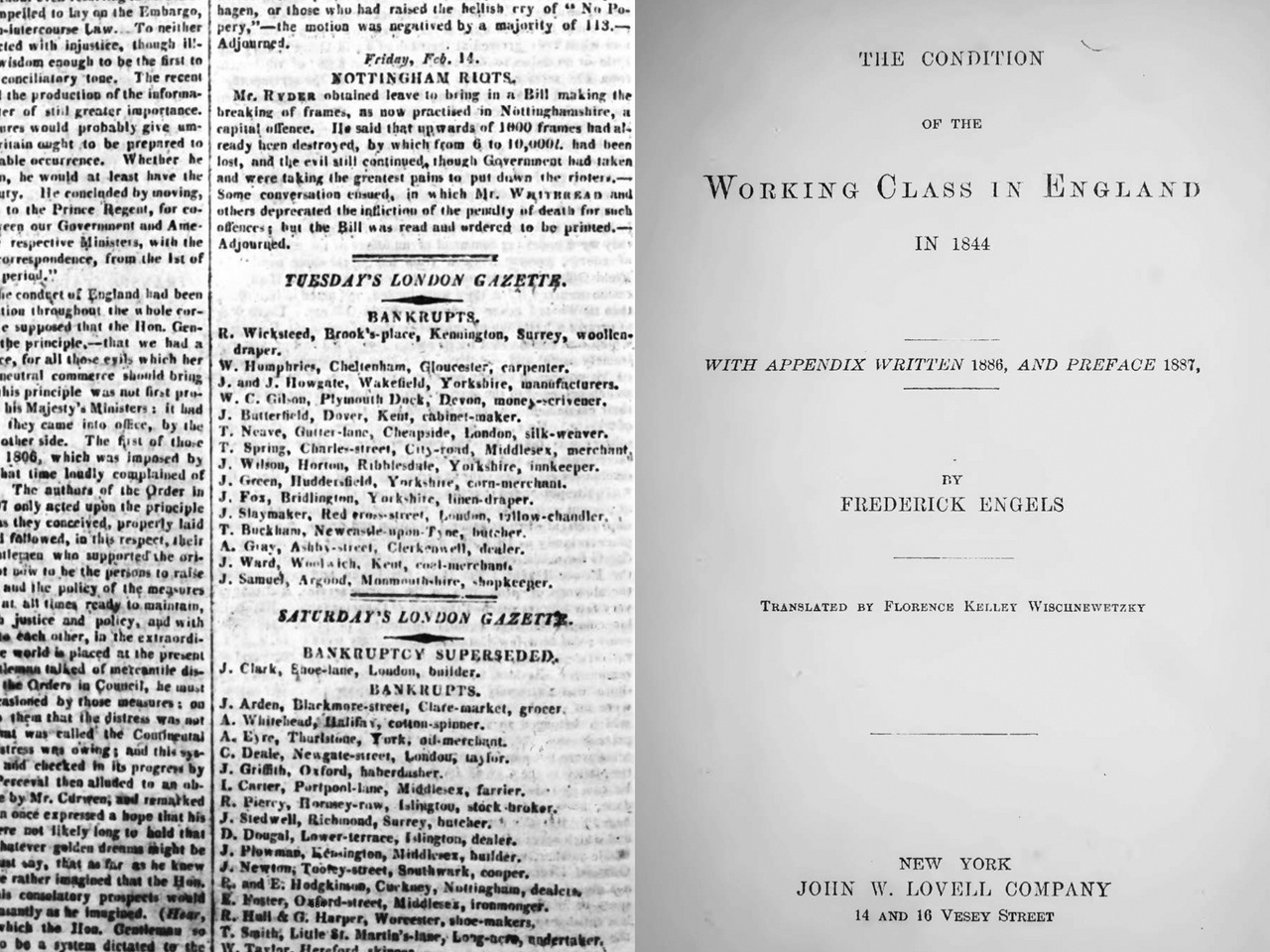
Even after using image-enhancing software, the excerpt from the 1812 edition of The Examiner is just awfully lo-res to be legible. Thus I decided to include 2 pages instead of 5, and fill the remaining 3 with an excerpt from Frederick Engels' The Conditions of the Working Class in England in 1844. Which was written long after the 1812 Luddite revolts, but there's enough of a thematic correlation to include it. And it beats relying entirely on a bunch of newspaper pages that are kind of impossible to read.

Chapter 9:
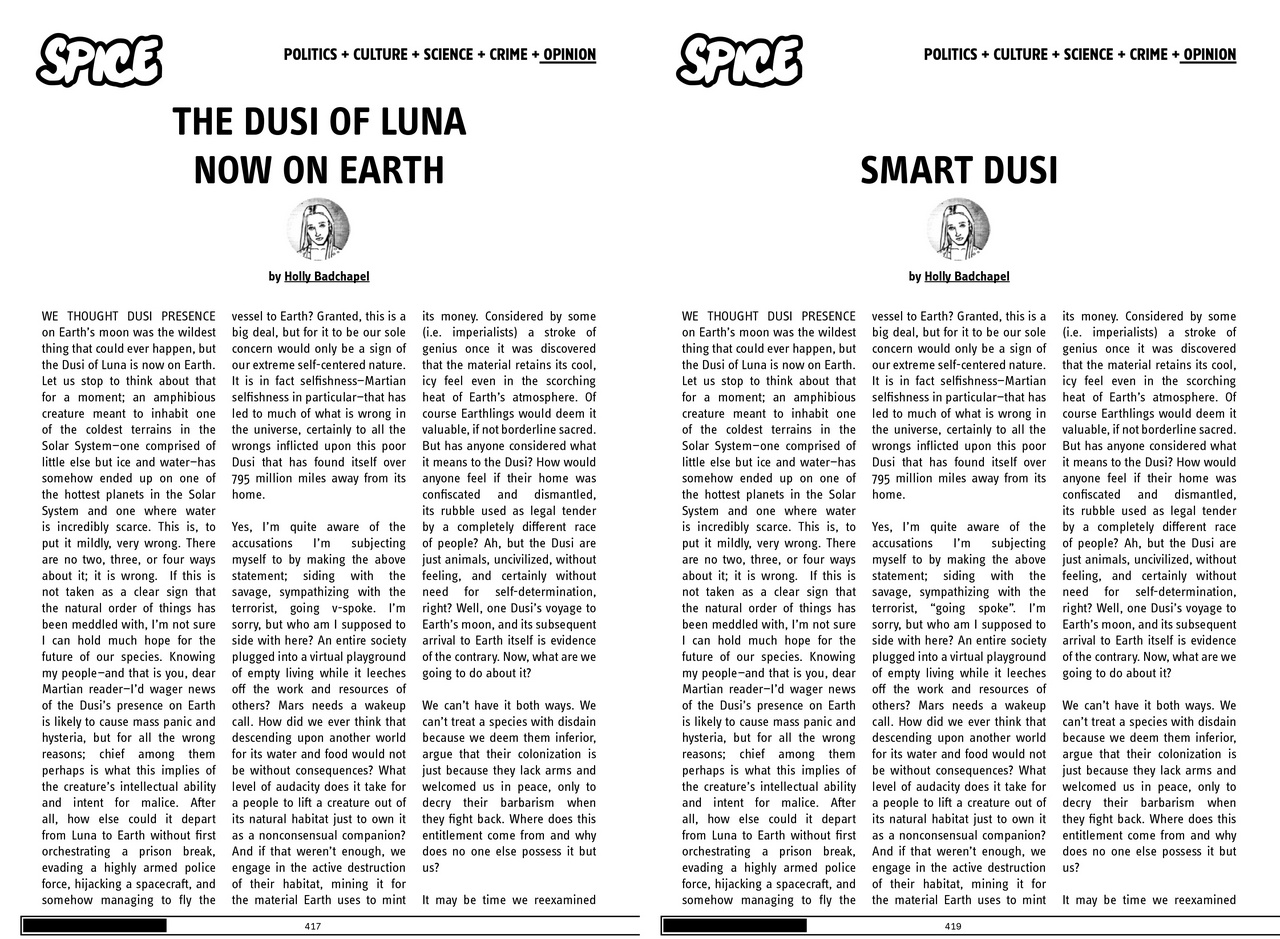
Opted for a less headliney title for the second appearance of Holly Badchapel's column.

Chapter 10:
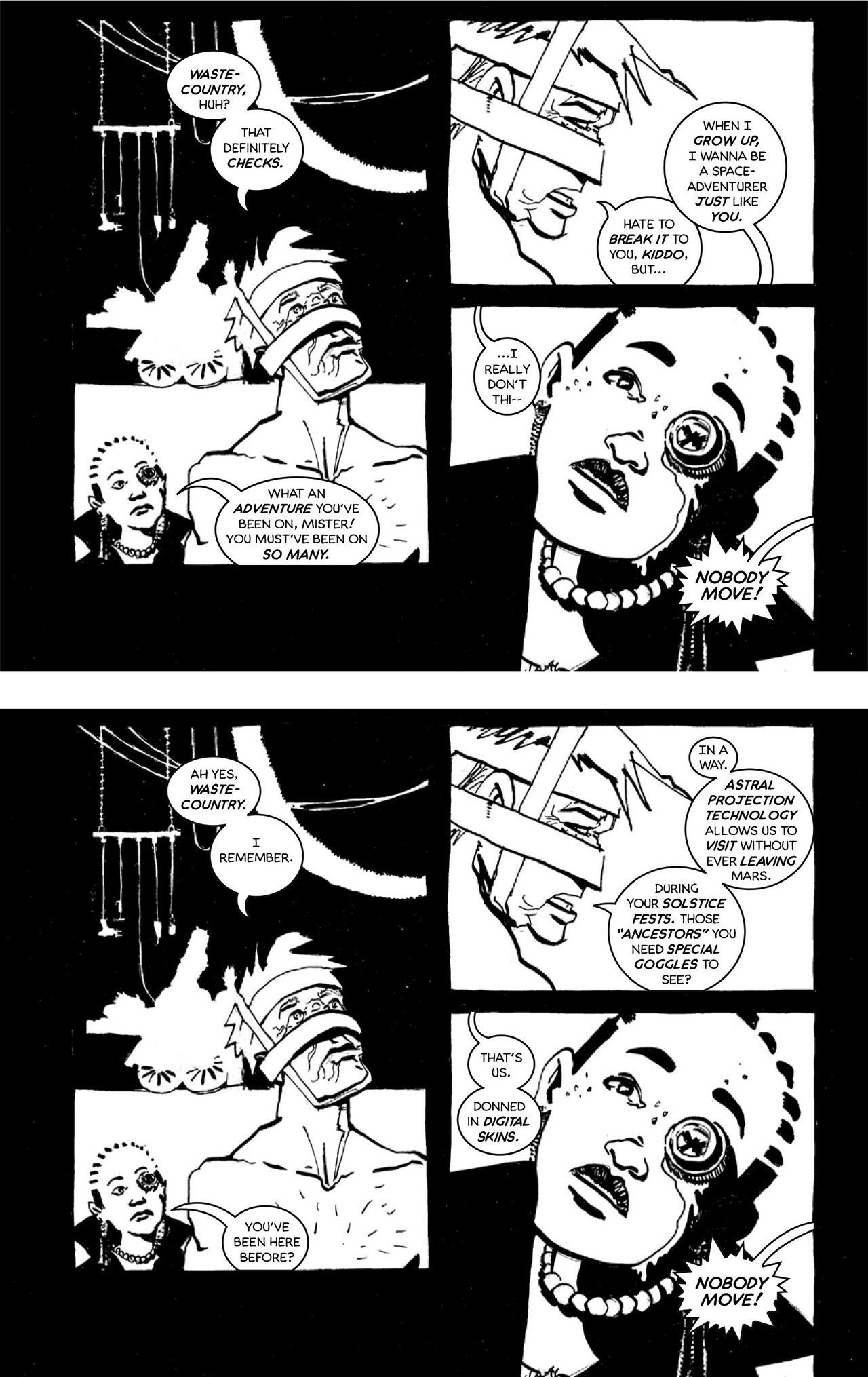
The original dialogue exchange (top) actually says very little. The revised version (bottom) becomes shockingly revelatory to young Mehret, and better ties to a couple of other scenes earlier in the book.
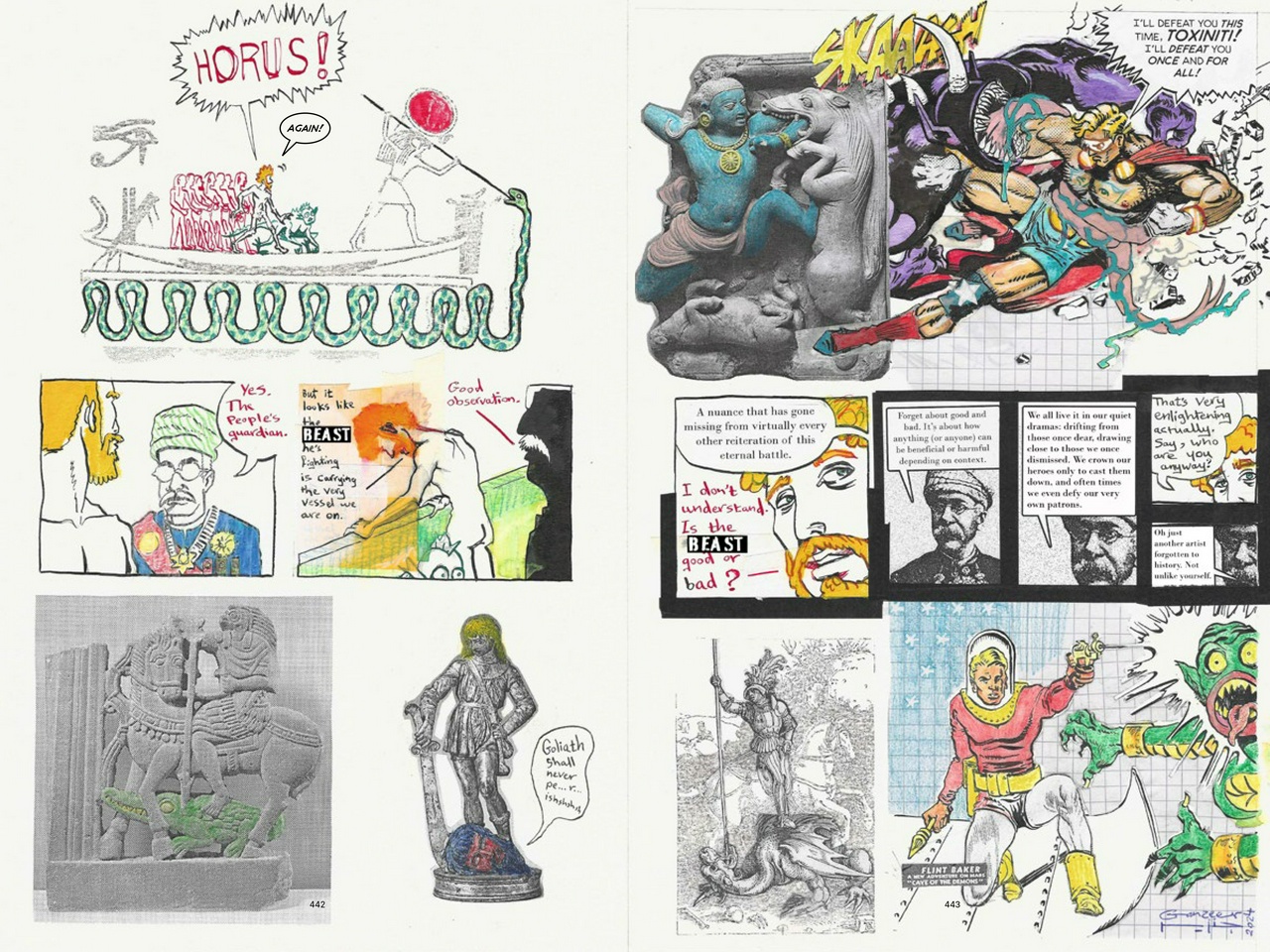
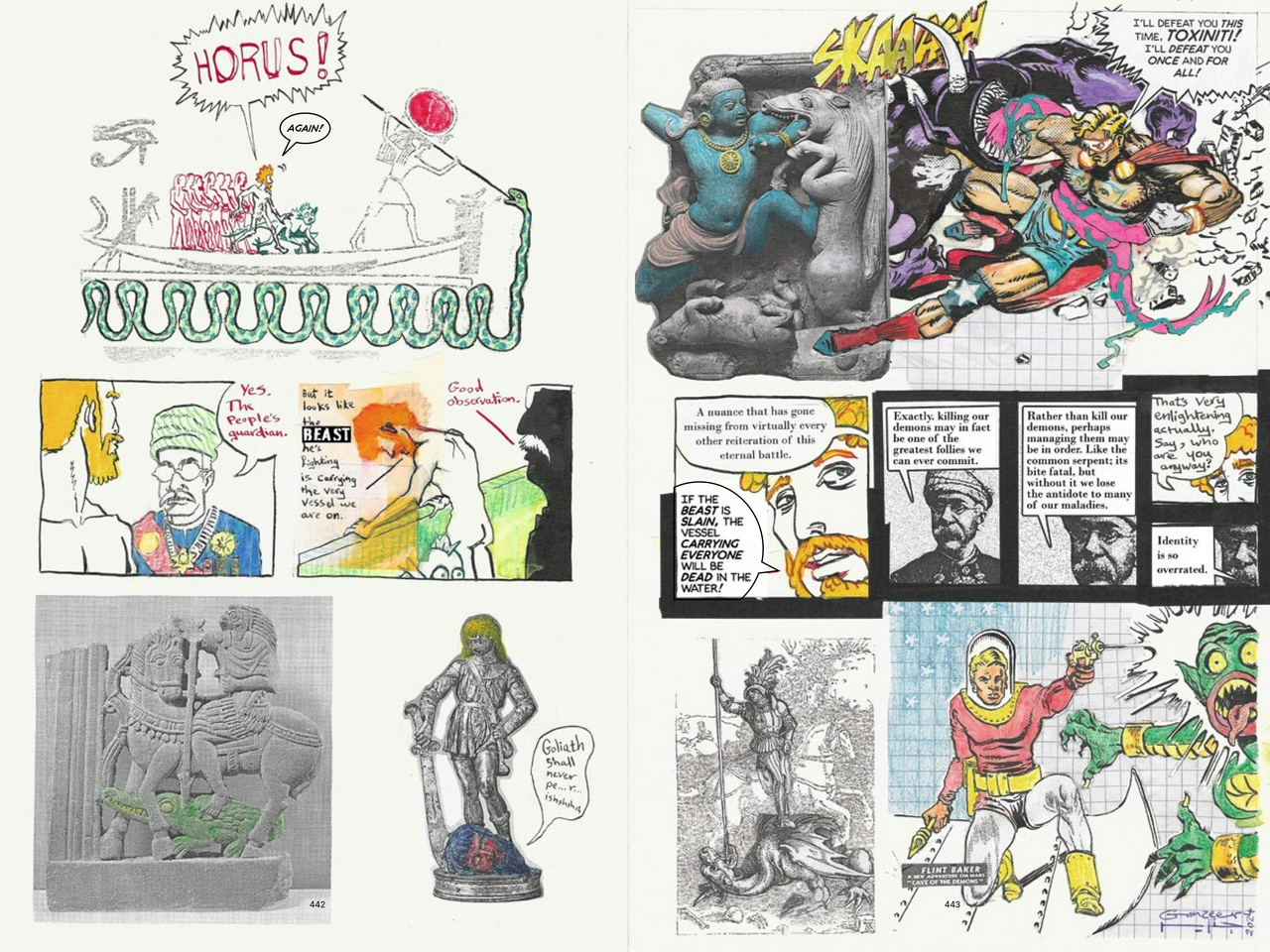
Such a delicate and pivotal scene that became clunky primarily due to the largely nonsensical dialogue (much of which is actually too small for comfortable legibility). The revised version below really makes the scene count (also, the tongue's color in the top right panel needed a little pop).
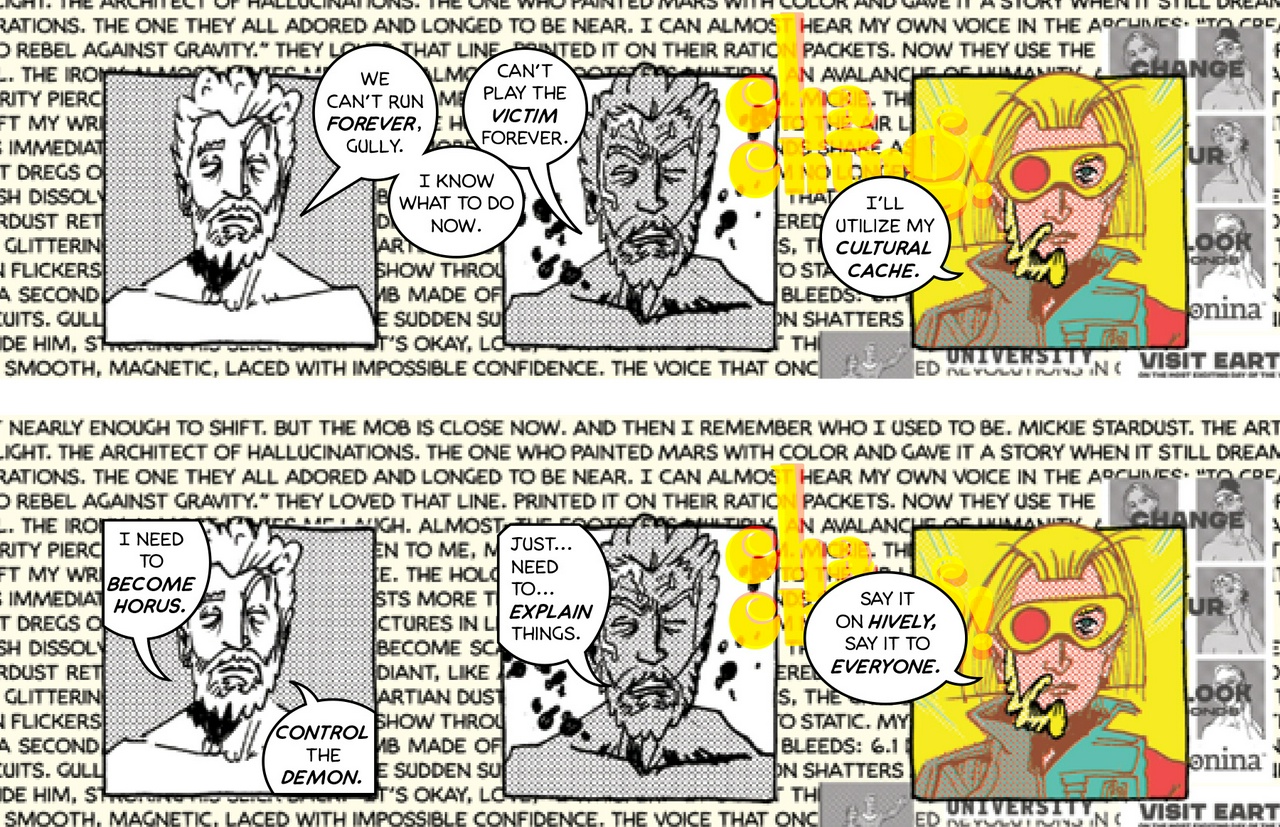
Revised dialogue (bottom) better ties to the collage sequence that came before.
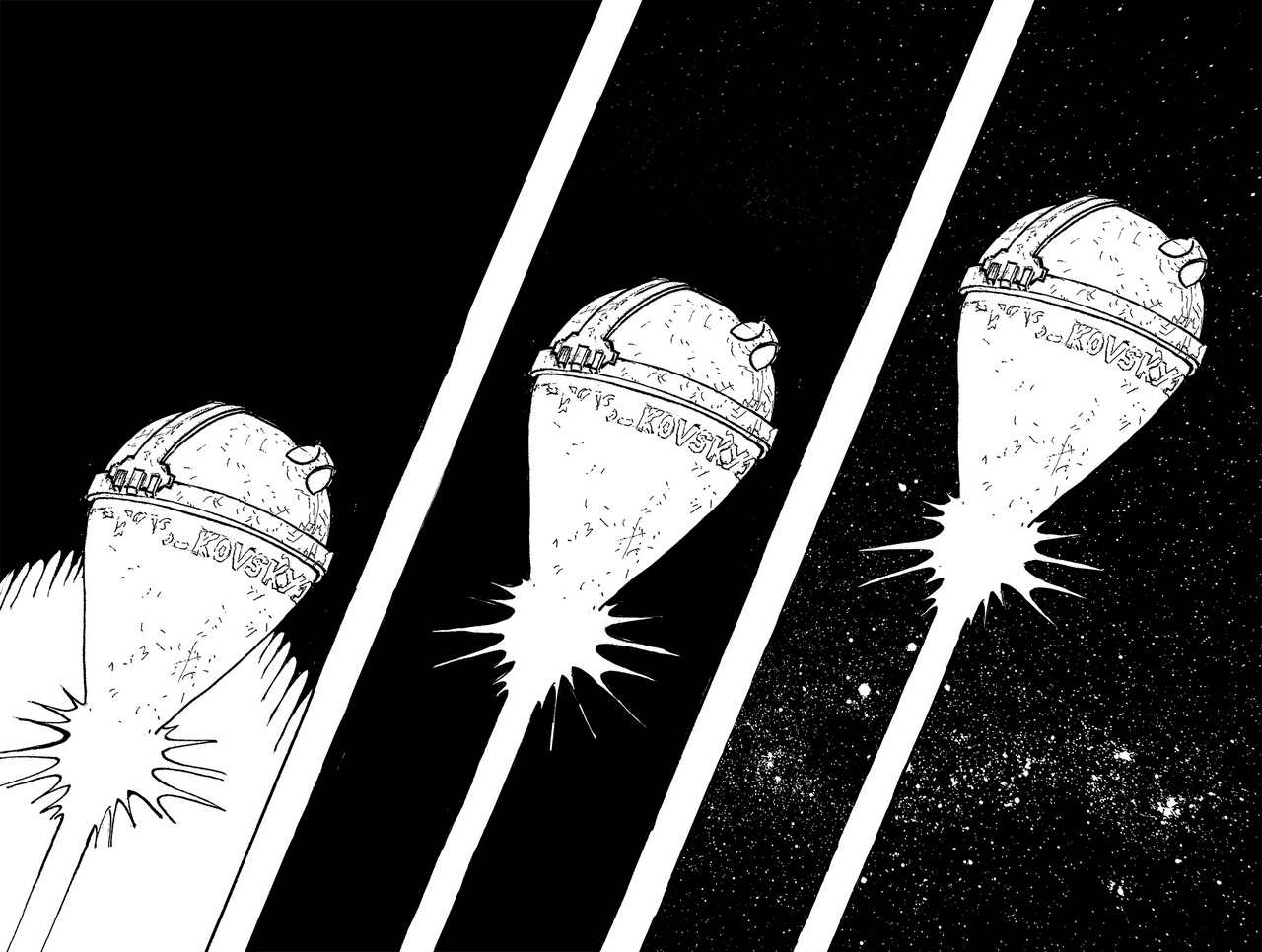
The Tsiolkovsky-1's launch into space didn't feel dramatic enough, so I added a double-page spread.
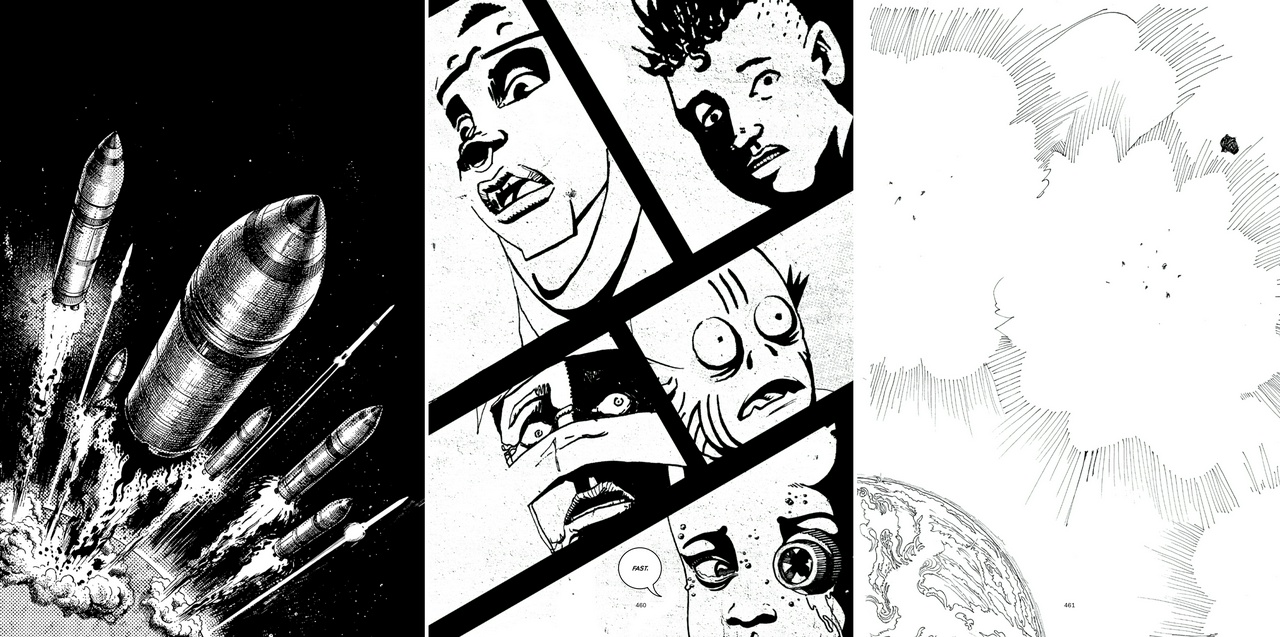
The Solar Grid's destruction—ostensibly the most important moment in the entire book—was way too abrupt. A couple extra pages help take the scene to a far more heightened level.
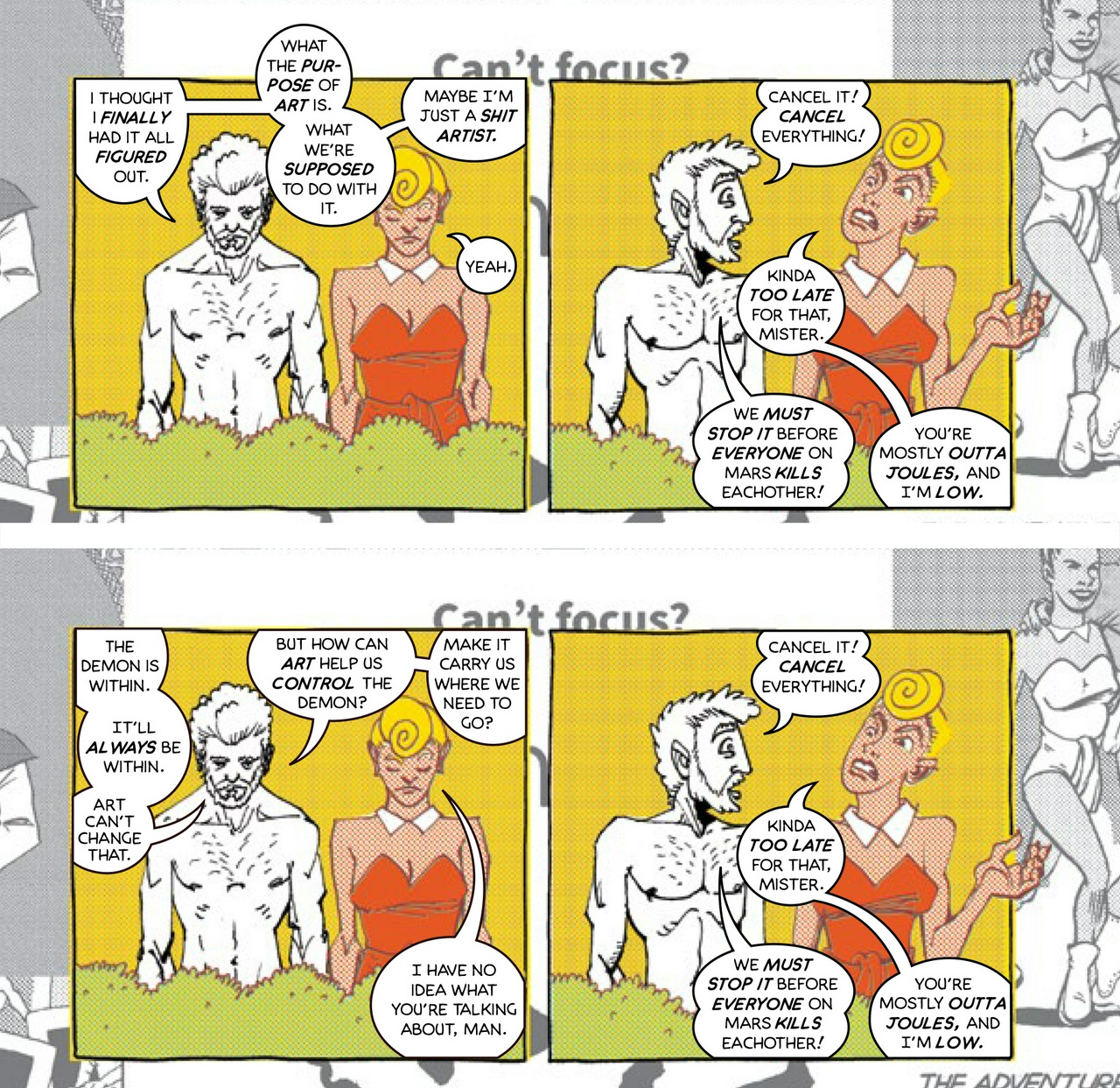
Again, revised dialogue (bottom) helps tie the scene to the pivotal collage scene that came before.
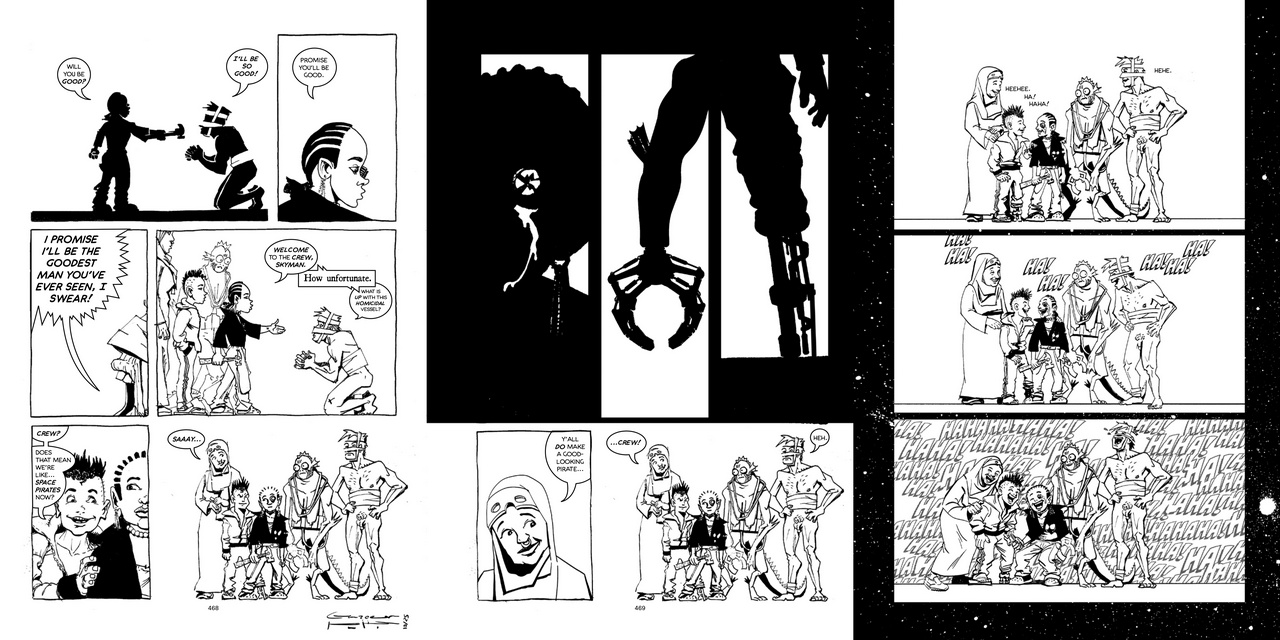
The joke towards the end didn't quite land very well the way I had originally depicted it. A couple extra pages allow the scene to breathe and make it work.

And finally, the very last closing page needed considerable reworking, but I'll refrain from showing that one here :–)

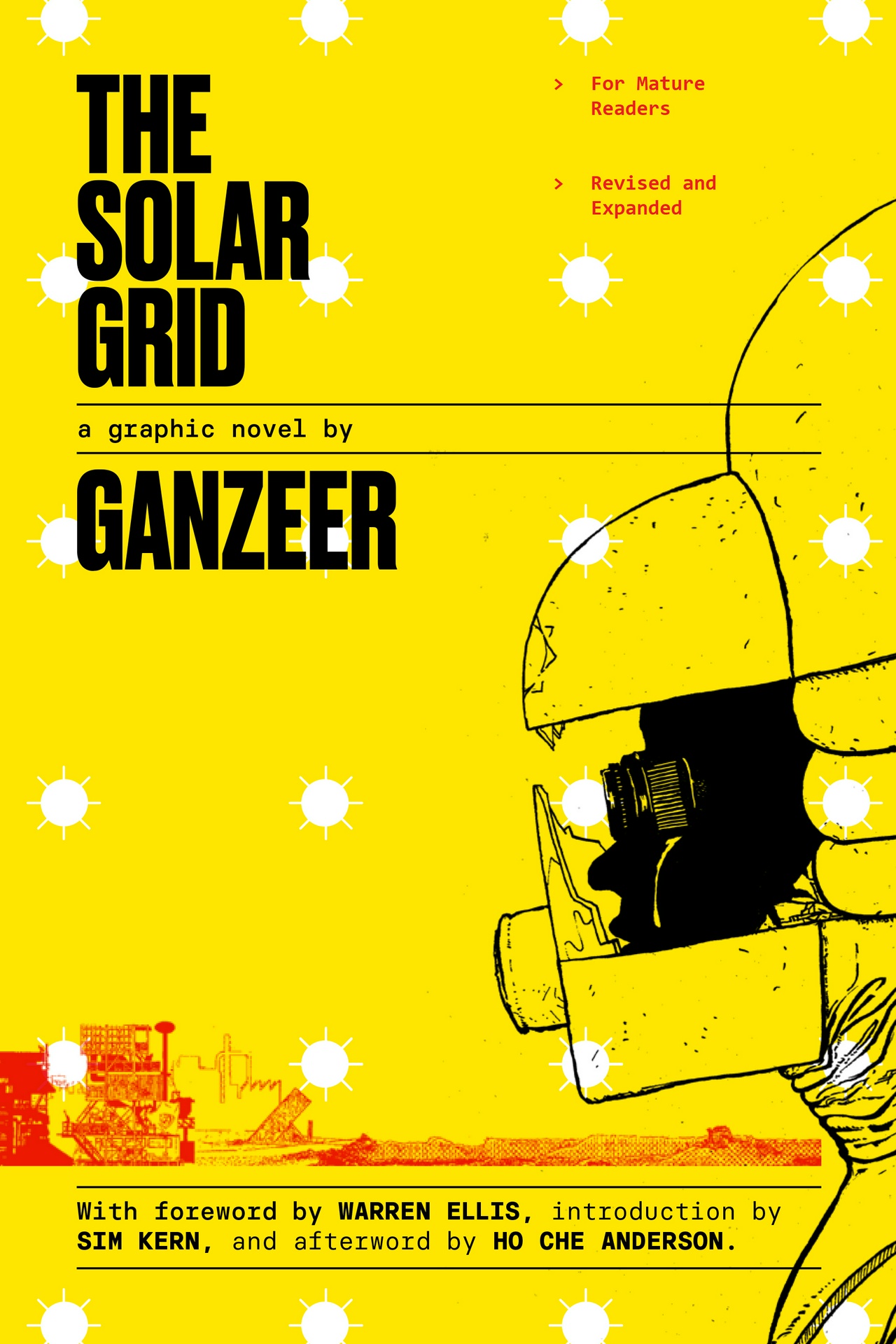
Sadly, none of the above revisions will be reflected in the serialized edition(s) from Radix Co-op or the boxset that collects them. But at least they get exclusive covers that don't appear in the “revised & expanded” edition.

Despite a considerably positive critical reception of THE SOLAR GRID to date, landing a publishing deal for the collected edition has thus far proven to be surprisingly challenging for some reason or another.

#comix #tsg #work
First thing I noticed was the missing pattern on old man Kovsky's headdress in a couple panels.

Then there was the panel where mechanical claw attached to the alien's forearm wasn't a claw at all; it was just a normal hand.

And Mickie Stardust's name in another instance was misspelled Mickey.

Horrified, I went through the entire graphic novel yet again, maybe my 10th time at this point, and all the horrendous mistakes were glaring and terribly embarrassing; typos galore, stiff bits of dialogue, all too confusing scenes and instances of wonky pacing.

Like painting, I'm fully aware that the only true deciding factor in the “doneness” of any work of art is when the artist says so, and it is often the case that an artist must step back and let go. And I wanted to let go, but I couldn't bring myself to, so the past week has been a deep spiral of edits and alterations in THE SOLAR GRID that I almost can't believe I didn't realize were necessary the first time around. The bad news is that none of these changes will be reflected in the serialized edition(s). The good news is we'll be seeing them in the collected edition (maybe mark it as “refined and expanded” or some such). Also, anyone who purchased the digital edition can easily be sent an updated file.

I might do a log of all the final changes made right here on the blog when I'm done. Two more pages of redrawing remain before I do a final pass.

This, I suppose, is the problem when you're the only pair of eyes working on a nearly 500-page graphic novel. 🙃

#work #comix #tsg

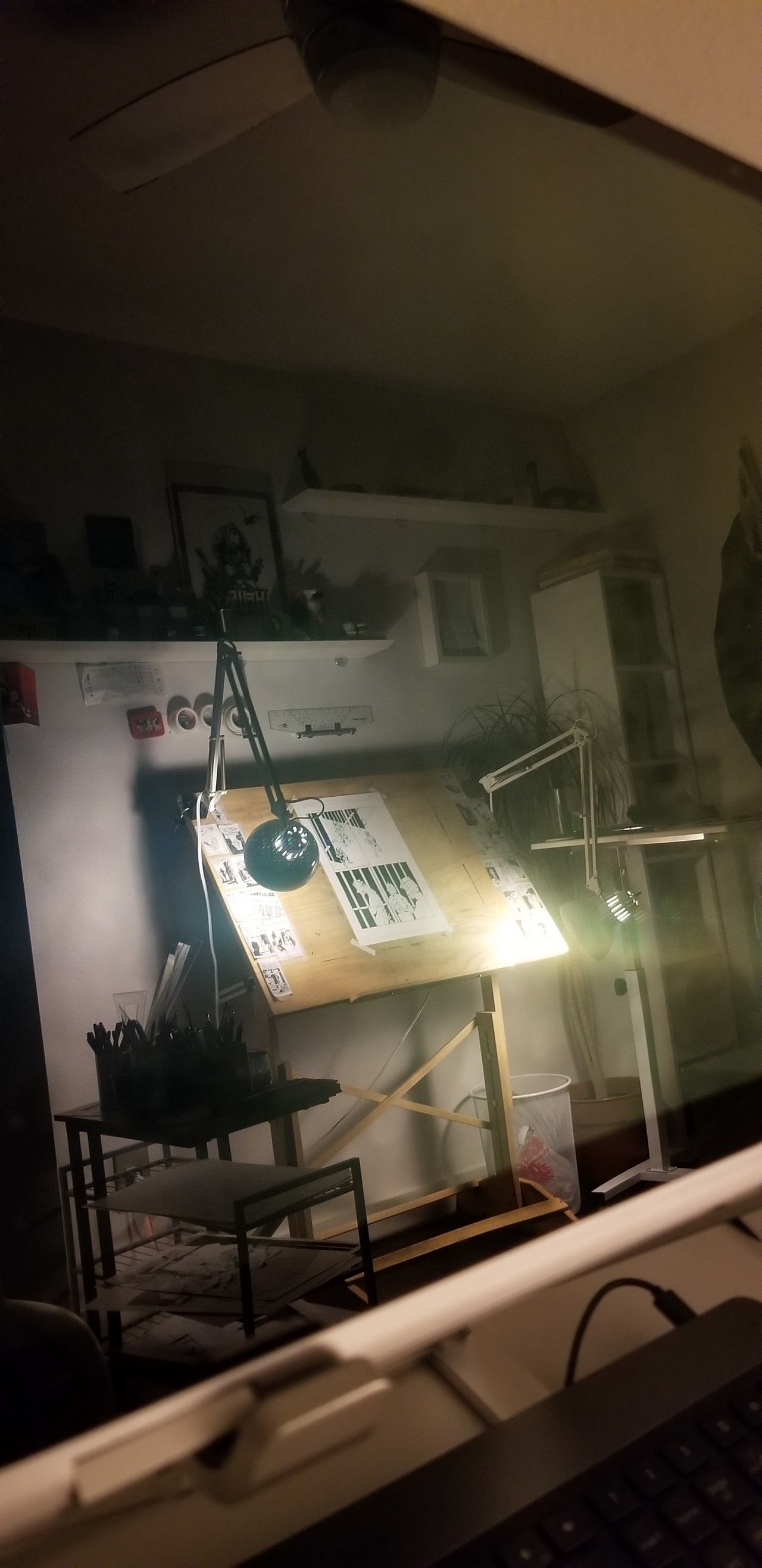
A few more pix from the archive this morning:

Second studio in Houston back in 2021.

Third studio in Houston circa 2024.

Writing space at 3rd Houston studio.

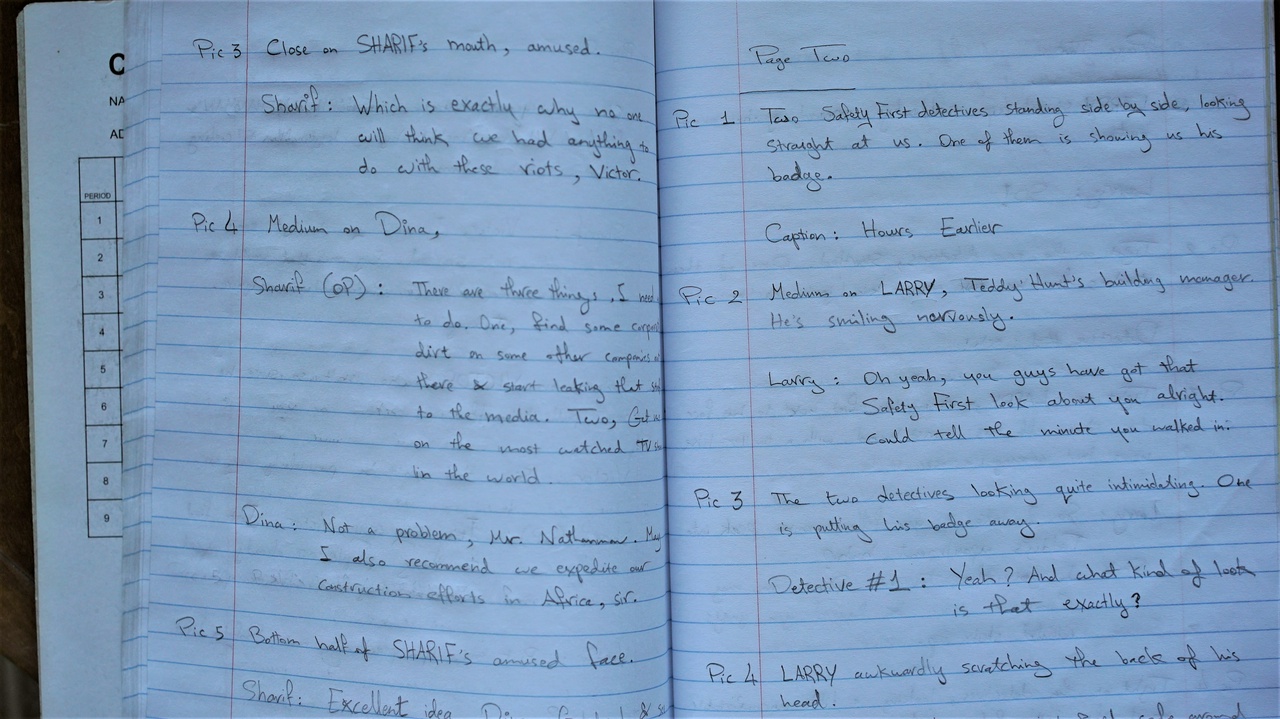
Early TSG script, written in Los Angeles around 2016, before I adopted more of a “Marvel Method” working from loose plots instead.

Have yet to come across pix from the fist Houston space, Denver studio, LA, or New York. It's all a jumbled mess.

#archive #TSG

One of the surest ways to infuse my life with misery is to sit me in front of a computer screen for multiple hours on end. Unfortunately for me, this past week has been mostly that, and the next week will likely entail more of the same. Some days I find myself clocking in something like 12 hours straight at the computer. Needless to say, this is not the life of the artist one aspired to as a child, but it is exactly what the job necessitates (at least for me I guess) in this evidently despicable century of human existence. Most of these hours don't actually involve doing much in the way of anything creative.

– TSG Exhibition: The ask included proposing objects that can be pulled from the world of THE SOLAR GRID; objects that could potentially be fabricated and displayed within an exhibition setting. This meant going through the entire now complete graphic novel with a particular eye for the speculative objects that could ostensibly work, making note of them, and putting them all into a presentable proposal-ready PDF.

– The Podcast Series: Going over the video recordings of the episodes (wherein I interview Egyptian artists), each one an hour long, and identifying the moments in which the guest talks about a particular project. Make a list of all mentioned projects, email it to the guest so they can send back relevant imagery of said projects. Once received, email them to the video editor along with time-stamps that indicate where the images ought to be spliced in.

-TSG Archive: Two things have necessitated going through my very unorganized history of TSG process documentation. And y'know, TSG took 10 years to complete, so that's a hell of a lot of unorganized history to go through. Which is how I stumbled upon this:

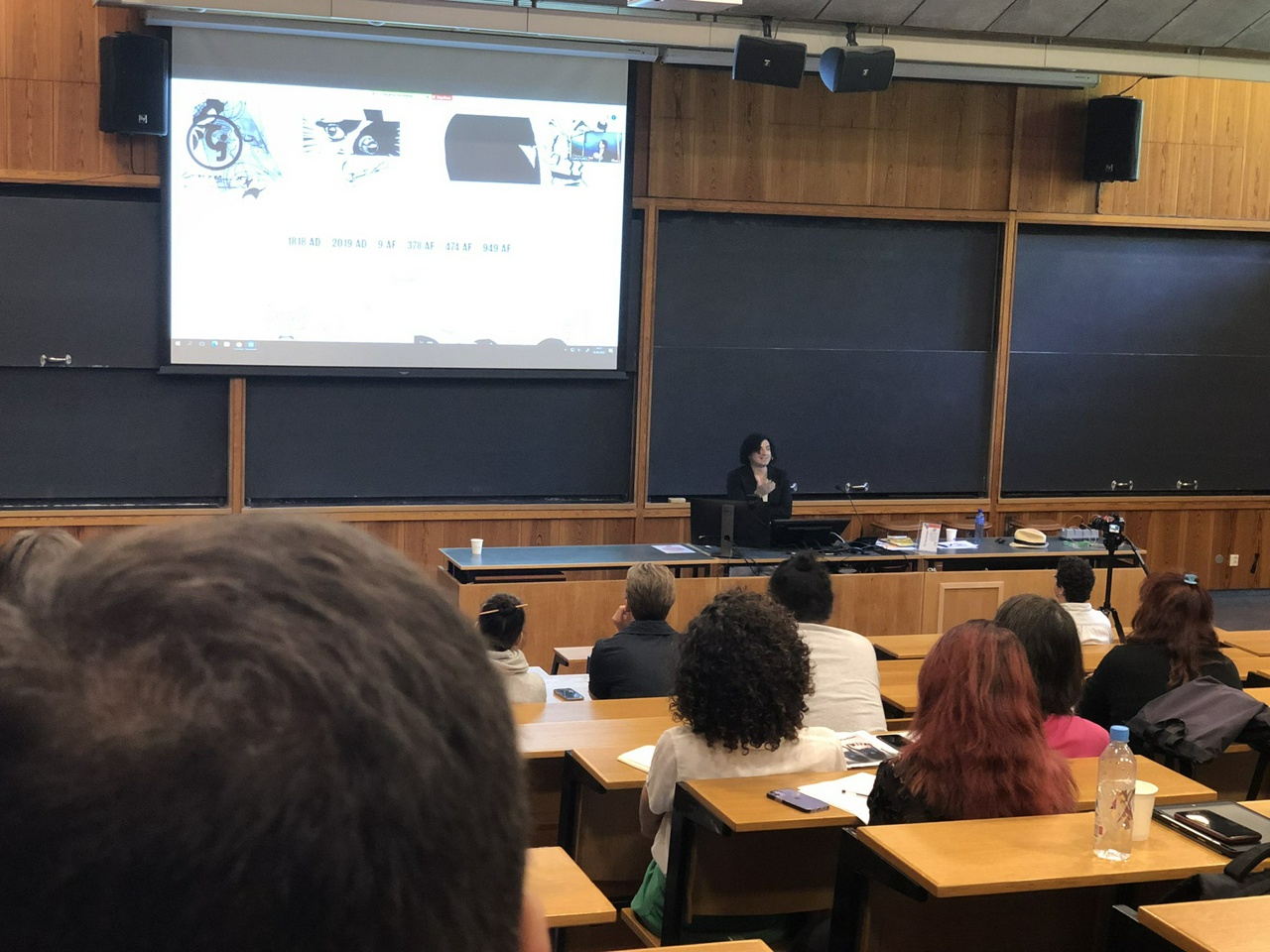
Giving a keynote presentation about THE SOLAR GRID at the Science Fiction Research Association conference held in Oslo circa 2022. Photo credit: lost (I'm so sorry!)

Of course, the above-mentioned projects haven't been the only reason behind recent computer-centric activities. There's also the usual stuff: email, accounting, flight bookings, etc.

My one piece of advice to young artists from here on out with be: Just know that it'll involve something like 70% admin, 20% actual creative work, and 10% putting out fires and/or wanting to die.

#journal #work #tsg

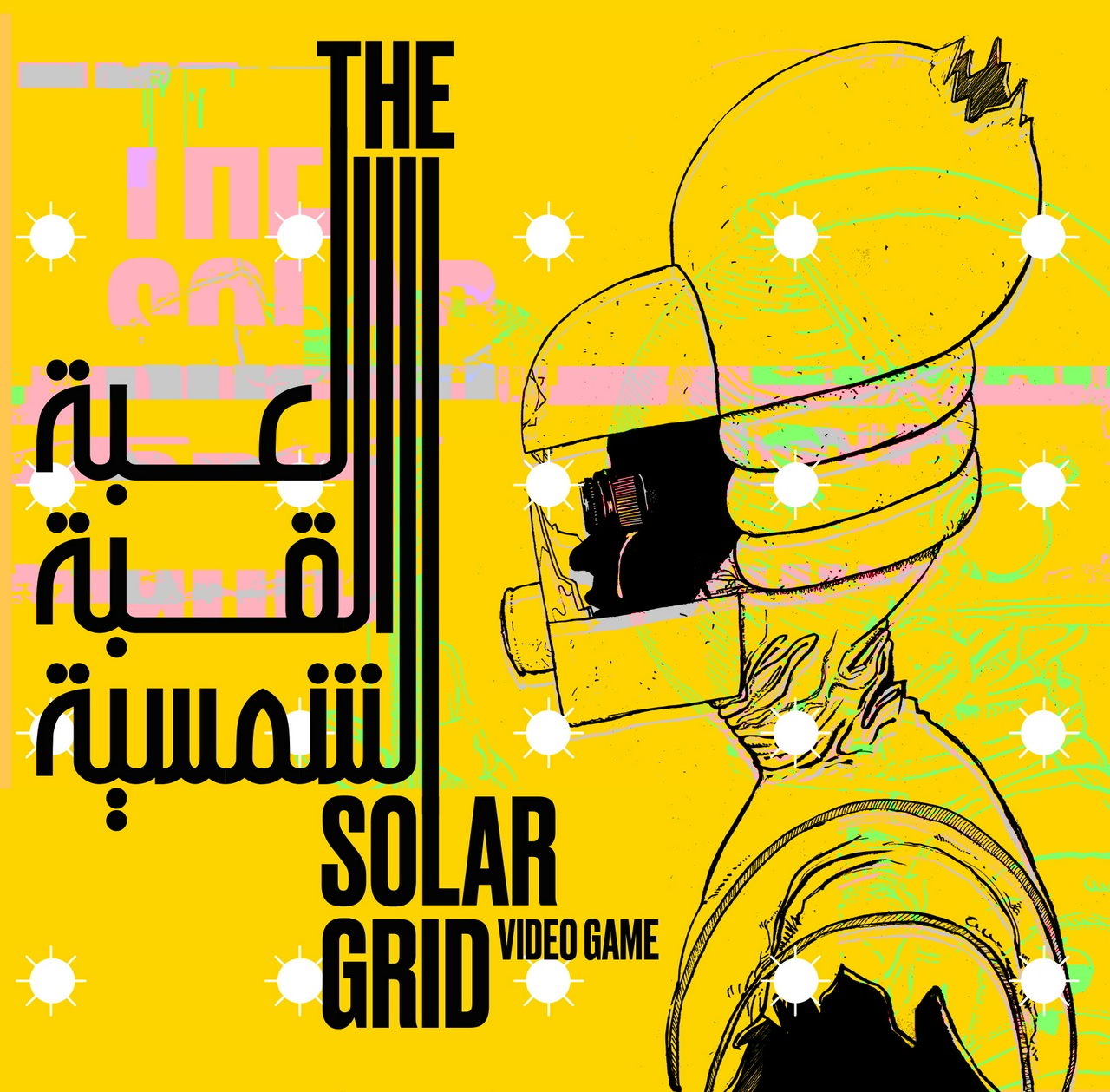
Excited to announce that my long time Emmy-award-winning friend Yasmin Elayat and I have received a generous grant from AFAC to adapt THE SOLAR GRID into a videogame:

THE SOLAR GRID: VIDEO GAME is a narrative adventure set in a post-collapse Earth powered by solar satellites. Players unearth speculative objects revealing buried histories of climate collapse. Knowledge is power. Will the players restore balance or fuel the forces of exploitation?

This is a two-year project that will see a playable demo based on THE SOLAR GRID developed, before we can tap into additional funding sources to take the project further.

#work #tsg

Based exclusively on downloads, it looks like THE SOLAR GRID has readers in Brazil, Canada, Egypt, Finland, Ireland, Mexico, The Netherlands, Portugal, Romania, Sweden, the United Kingdom, in addition of course to the United States.

The story, I think, is just asking to travel into other languages.

The latest newsletter went out a couple days ago. RESTRICTED FREQUENCY #234: Shortform.

#journal #RF #TSG

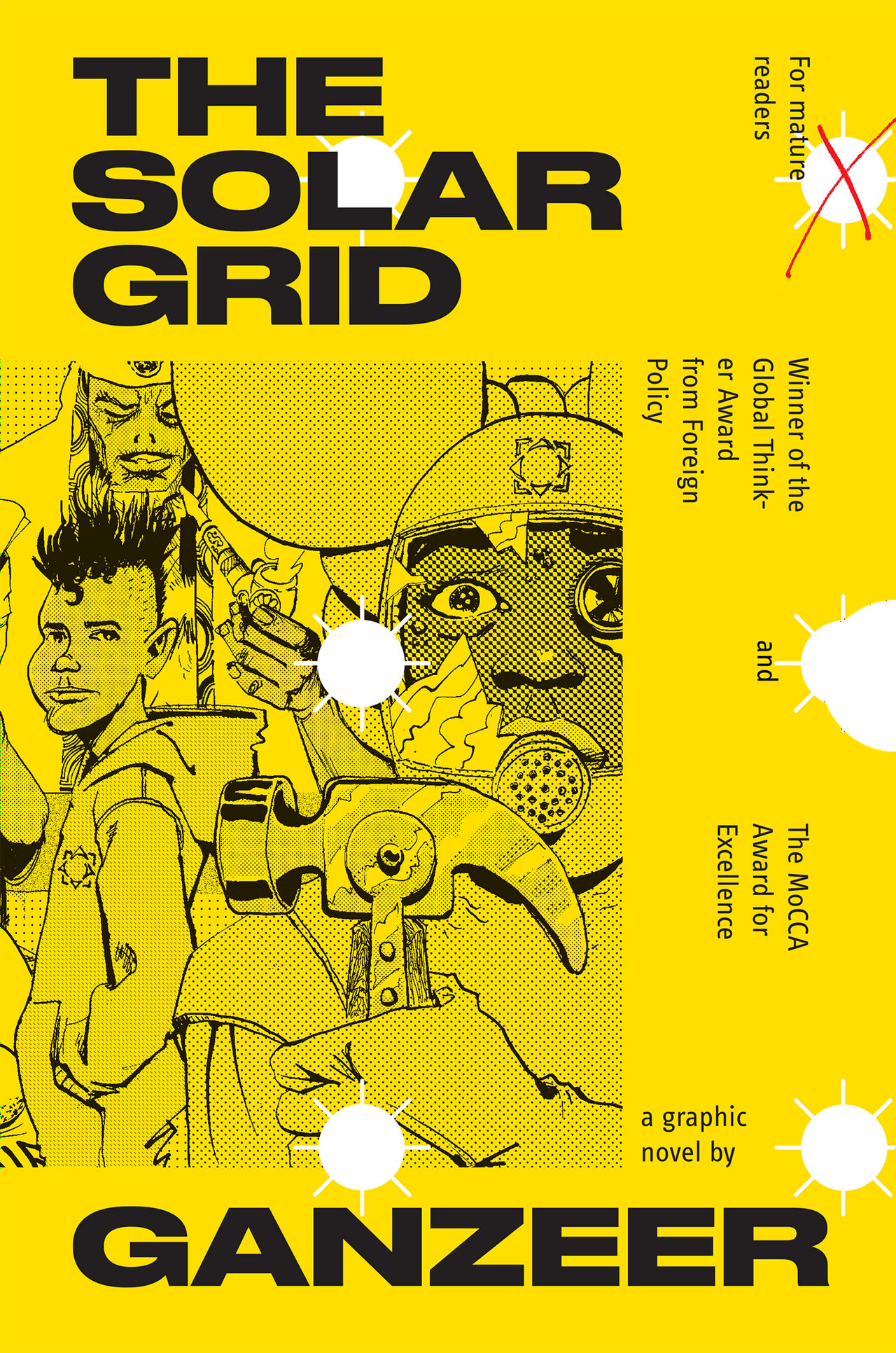
After popular demand, the complete THE SOLAR GRID graphic novel is now available for download. For a limited time only, there are presently two ways to get it:

The book is also being serialized in print from Radix Co-op.

A pathway for a collected print edition is still being explored.

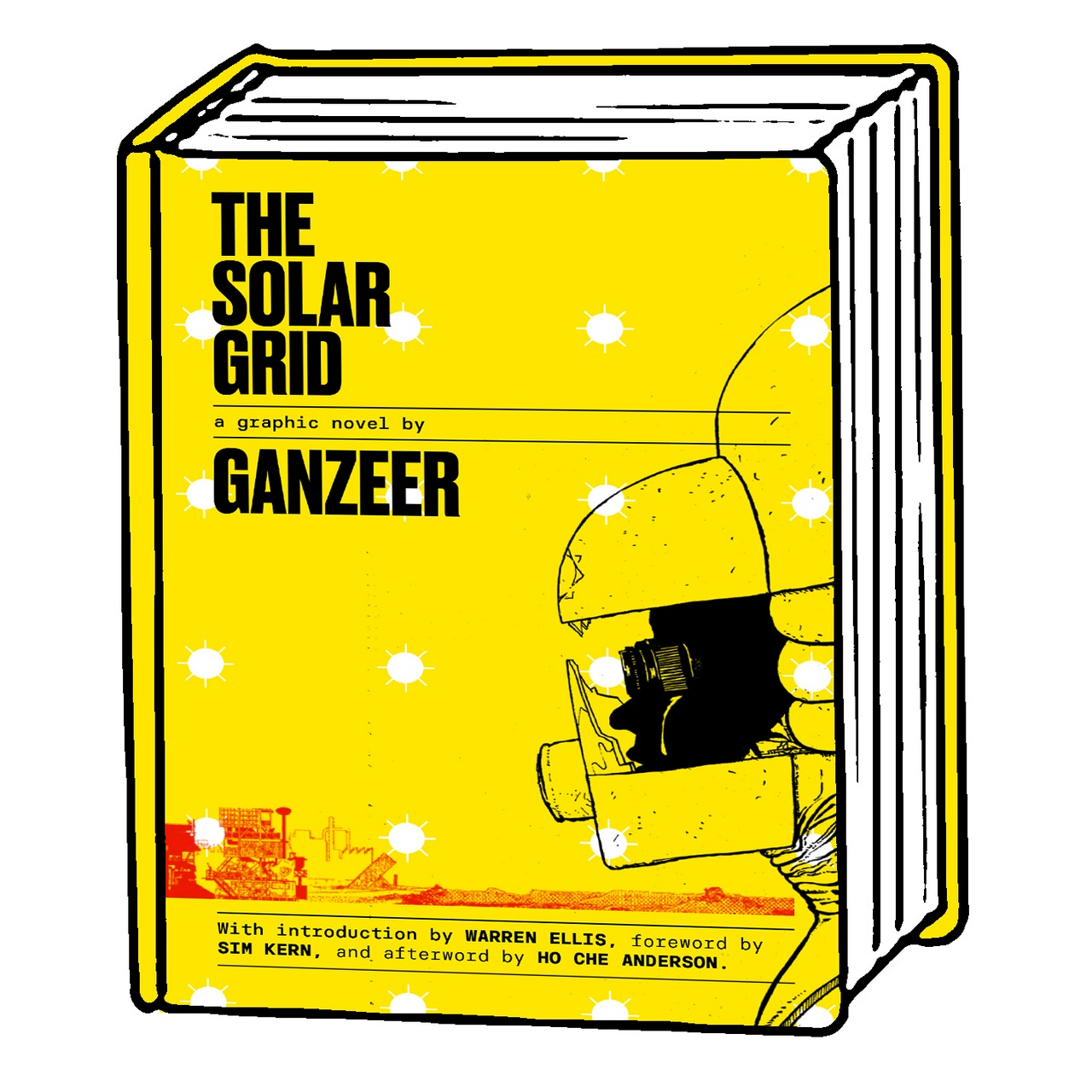
This complete e-book edition comes with a never-before-seen introduction by Warren Ellis (Transmetropolitan, Castlevania, Normal), extensive foreword by Sim Kern (The Free People's Village, Genocide Bad), and fantastic afterword by Ho Che Anderson (King, I Want To Be Your Dog, Godhead).

Hundreds of years after a global flood, night has been consigned to legend. In its place, the Solar Grid—a vast network of artificial suns—keeps Earth bathed in relentless daylight, powering factories that never cease. But this eternal dawn comes at a cost: The Earth has become a scrapheap, a wasteland stripped of resources to fuel colonial settlements on Mars.

Amidst the ruins, two young scavengers, Mehret and Kameen, stumble upon a discovery that could shatter the Solar Grid's fragile, oppressive system. The story spans centuries—from a submerged Cairo to the corporate strongholds of New York, and into the augmented reality of a distant Mars. Environmental collapse, capitalism, imperialism, and migration collide in an epic tale that examines the hopes and consequences of unhinged techno-utopianism.

“Ganzeer treats The Solar Grid as a culmination of his personal, professional and political experiences over recent years.” – THE GUARDIAN

“Ganzeer’s project epitomizes his hyper-democratic ethos.” – FOREIGN POLICY

“It’s a story about the inevitable destruction of our planet by corporate greed and a couple of unassuming antiheroes who somehow bring it all down. This is a story of revolution, the powerless taking power back from the powerful.” – SLATE

#work #comix #tsg

Humbled to see that THE SOLAR GRID has been getting a fair degree of scholarly interest in recent years. These two popped up on my radar:

#radar #TSG